
موقع حكومي رسمي تابع لحكومة المملكة العربية السعودية


تنتهي روابط الموقع الرسمي للحكومة السعودية بـ gov.sa
جميع روابط المواقع التعليمية الرسمية في المملكة العربية السعودية تنتهي بـ sch.sa أو edu.sa

تستخدم المواقع الحكومية HTTPS بروتوكولًا للتشفير والأمان.
المواقع الآمنة في المملكة العربية السعودية تستخدم بروتوكول HTTPS للتشفير.



SDG 3.3.3 Shared sports facilities with the local community
 نُشِر في 2024-10-23
Updated 30//10/2025
Majmaah University’s Community Sports Facilities Sharing (2018–2025)
Community Access and Partnerships
Majmaah University (MU) actively opens its sports facilities and programs to the local community. Over the past 5–7 years, MU has provided community access to both indoor and outdoor sports venues through collaborations with schools, sports clubs, and government bodies:
-
Local Schools & Youth Programs:
MU’s community service initiatives include youth-oriented fitness programs. For example, the University’s College of Science and Human Studies in Al-Ghat ran a 45-day “Graceful Al-Ghat” competition hosted at a local high school’s club to combat obesity – featuring daily exercise classes and healthy eating workshops mu.edu.sa. This program, supported by MU’s Deanship of Community Service, engaged school-age youth and community members in regular physical activity, demonstrating MU’s commitment to public health through sports mu.edu.sa. Additionally, MU has historically partnered with regional youth welfare offices to support sports activities in the provinces it serves mu.edu.sa. These partnerships indicate that MU’s facilities and staff have been involved in youth sports events and training programs beyond campus, fostering school and community engagement in sports.
"Rasheeq Al Ghat" competition
https://www.mu.edu.sa/ar/news/
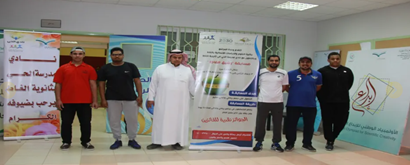
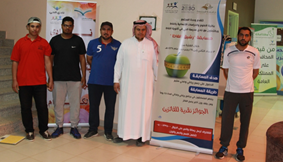
"Rasheeq Al Ghat" Competition The Community Service Unit at the College of Science and Humanities in Al Ghat, with the support of the Deanship of Community Service, launched the Rasheeq Al Ghat Competition. The competition was launched by the Vice Dean for Educational Affairs and Supervisor of the Vice Deanship for Graduate Studies, Dr. Mohammed Al-Waneen, on Sunday, 13/6/1438 AH. This competition aims to reduce obesity and encourage people to exercise and eat healthy. The competition will last for 45 days, including daily sports classes and other accompanying programs such as healthy dishes and awareness programs to combat obesity. This competition is held daily at the neighborhood club at Al Ghat Secondary School. On this occasion, His Excellency the Dean of the College, Dr. Omar Al-Omar, expressed his thanks and gratitude to the Dean of Community Service, His Excellency Dr. Omar Al-Sharifi, for their support for such activities that have a positive impact on the community. He also expressed his thanks to the Supervisor of the Community Service Unit at the College, Mr. Abdullah Al-Saadoun, for his distinguished efforts in this field.
This competition aims to reduce obesity and encourage exercise and healthy eating. Where the competition lasts 45 days, interspersed with daily sports classes and other accompanying programs such as the healthy dish and awareness programs to combat obesity, and this competition is held in the neighborhood club in Al-Ghat High School daily.
On this occasion, His Excellency the Dean of the College, Dr. Omar Al-Omar, expressed his thanks and gratitude to the Dean of Community Service, His Excellency Dr. Omar Al-Sharifi, for their support for such activities, which have a positive impact on society, and he also expressed his thanks to the supervisor of the Community Service Unit at the College, Mr. Abdullah Al-Saadoun, and his distinguished efforts in this field.
-
Community Sports Clubs & Events:
MU shares its facilities and expertise with local sports clubs and hosts community sports events. Notably, the University has a standing partnership with the Majmaah Equestrian Club, illustrated by MU sponsoring equestrian tournaments open to the public. In 2023, MU’s President presided over the “Majmaah University Award” equestrian race (the club’s fifth race ceremony) at the Prince Faisal bin Khalid Equestrian Field, awarding a new car to the winnermu.edu.sa. MU emphasized that this sponsorship “comes as an extension of its societal role” and reflects “the university’s keenness to activate community partnership with all sectors”, including sports clubsmu.edu.sa. The University openly invited local residents and sports enthusiasts to attend these horse races, reinforcing that they were community eventsmu.edu.sa. MU has also collaborated with professional sports clubs in the region. In 2019, MU (through its International Rehabilitation Center) signed cooperation agreements with Al-Fayha Football Club – a local Saudi Premier League club – as well as with a Saudi sports federationmu.edu.sa. These agreements facilitate knowledge exchange and may involve shared use of training or rehab facilities, integrating the university’s resources with local club activities. Moreover, MU co-organized a sports culture symposium with Al-Faisaly Sports Club (another regional club) alongside community development committees, marking the UN International Day of Sport for Developmentmu.edu.sa. This event, titled “Saudi Sports...Peace Platform, Intercultural Crossroads and Development Engine,” was open to the public and brought local sports leaders and enthusiasts onto campus to discuss sports’ role in societymu.edu.sa. Such collaborations with community clubs – from equestrian to football – show that MU’s sports venues and programs are not confined to campus use but serve as a hub for local sports culture and events.
The University Hosts the Finals of the Universities Basketball Championship
https://www.mu.edu.sa/ar/news/general/214086
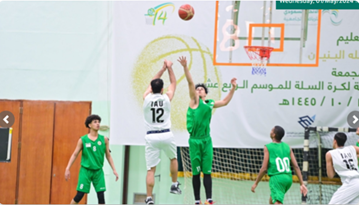
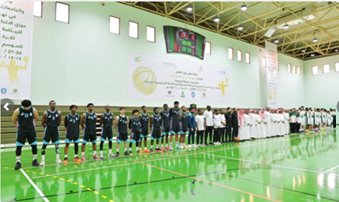
Under the patronage of His Excellency the Minister of Education, Mr. Yousef bin Abdullah Al-Benyan, the university hosted the finals of the Saudi University Sports Basketball League for the fourteenth season, with the support and guidance of His Excellency the President of the University, Prof. Dr. Saleh bin Abdullah Al-Mizil, and the follow-up of the Vice President for Educational Affairs, Prof. Dr. Muhammad bin Saleh Al-Aboudi, and the supervision and implementation of the Deanship of Student Affairs, during the period from 24-27/4/2024 AD corresponding to 15-18/10/1445 AH, in which King Abdulaziz University and Taibah University participated. , King Faisal University, and Imam Abdulrahman bin Faisal University.
The first match of the semi-final round was held between Taibah University and King Faisal, and the meeting ended with the victory of Taibah University, to be the first party in the final of the tournament, and in the second match of the semi-final round, the King Abdulaziz University team and the Imam Abdulrahman bin Faisal University team met, and the meeting ended with the victory of King Abdulaziz University, to be the second party in the final of the tournament, and a match was held to determine the third place. between King Faisal University and Imam Abdulrahman bin Faisal University to win Imam Abdul Rahman bin Faisal and achieved third place in the championship.
In the final match between Taibah University and King Abdulaziz University, which was honored by the Vice President for Educational Affairs, Prof. Dr. Muhammad bin Saleh Al-Aboudi, and the President of the Saudi University Sports Federation, Prof. Dr. Khaled Al-Muzaini, and in the presence of the Dean of Student Affairs, Dr. Saleh Al-Rashidi, and the Secretary-General of the Saudi University Sports Federation, Dr. Muhammad Al-Shammari, and a number of university employees, the Sports Federation of Saudi Universities and basketball lovers, where it was a competitive sports final won by Taibah University to achieve the basketball league championship while the second place went to King Abdulaziz University.
At the end of the match, the Saudi University Sports Federation honored the university for hosting the finals of the Saudi University Sports Federation, and the Dean of Student Affairs at the university was honored with commemorative shields, as well as the tournament referees accredited by the Saudi Basketball Federation, after which the winning teams were honored, as Imam Abdulrahman bin Faisal University won the third place cup, bronze medals, and an amount of 20 thousand riyals, while King Abdulaziz University achieved the second place cup, and silver medals. And the amount of 30 thousand riyals, and Taibah University achieved the first place cup, gold medals, and the amount of 50 thousand riyals.
It is noteworthy that during the days of the tournament, a reception and honoring ceremony was held for the participating universities, members of the Saudi University Sports Federation, tournament referees, and success partners from the university and abroad, and during the ceremony souvenirs and the championship shield were distributed to the parties and gifts of the Deanship to students of the participating universities, how much was a tourist program held in Zulfi Governorate for university guests, and participated in organizing the hosting with the Deanship of Student Affairs, Zulfi Club, by holding championship matches on its sports hall, and the General Administration of Relations and Conferences, the General Administration of University Security, the General Administration of Services, the General Administration of Projects, Operation and Maintenance, the Media Center, and the University Medical Center.
This was mentioned by the Head of the Sports and Scouting Activity Department, Chairman of the Organizing Committee of the Championship, Mr. Nasser Al-Hanno, who expressed his thanks and appreciation to the Dean of Student Affairs, Dr. Saleh bin Amileh Al-Rashidi, for his support, and to the Vice Dean for Student Activities, Dr. Khaled Al-Salem, for his follow-up, and to all his colleagues in the department and all employees of the Deanship for their cooperation.
For his part, the Dean of Student Affairs expressed his sincere thanks and appreciation to His Excellency the President of the University for his constant support, to the Vice President for Educational Affairs for his continuous follow-up, to the Sports Federation of Saudi Universities for choosing the university to host the championship, and to all cooperating parties from the university and outside it for their contribution to the success of this hosting, which is a sports movement among Saudi university students and the university was honored by them.
The President of the University sponsors the fifth race ceremony of the Equestrian field in Majmaah
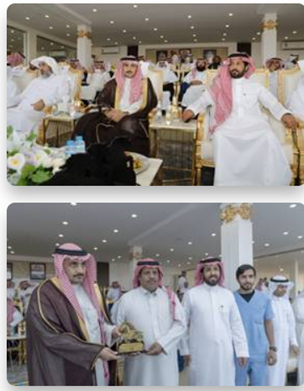
His Excellency the President of the University, Prof. Saleh bin Abdullah Al-Mizil, sponsored the fifth race ceremony of His Royal Highness Prince Faisal bin Khalid Equestrian Square in Majmaah, for the Majmaah University Award, in the presence of the university’s vice-rectors, a number of officials in the governorate, university employees and those interested in this ancient sport, where the university presented the prizes of this race, which is a car that was handed over to the winner of the main half of the ceremony, in addition to a number of other awards delivered during the race runs. The university's sponsorship of this race comes as an extension of its societal role and an affirmation of the university's keenness to activate community partnership with all sectors and entities in a way that contributes to providing community service and achieving its goals.
His Excellency the President of the University praised the welcome and good organization he found and thanked His Excellency the President of the Equestrian Field in Majmaah for their efforts to serve this ancient sport.
The University and the Committee implement a symposium (Saudi Sports... Peace Platform, Intercultural Crossroads and Development Engine)
https://www.mu.edu.sa/ar/news/centers-and-institutes/social-responsibility-obeservatory/180056
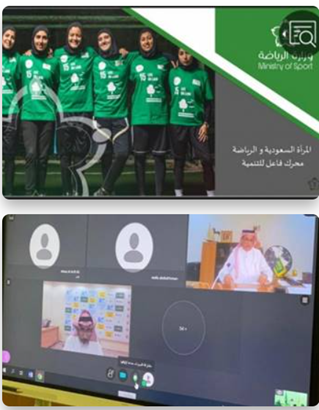
Within the framework of its keenness to activate the development movement that stems from building partnerships and discusses development issues, the university, represented by the Social Responsibility Observatory and in partnership with the Women's Committee for Community Development in Riyadh, the Family Affairs Committee of the Region Council and Al-Faisaly Sports Club, implemented a symposium right (Saudi Sports... Peace Platform, Intercultural Crossroads and Development Engine), on the occasion of the International Day of Sport for Peace and Development.
A number of leaders and those interested in development participated in the symposium by discussing the themes of the symposium.
The seminar began by thanking the Women's Committee, represented by Her Highness Princess Nourah bint Mohammed Al Saud, Chairperson of the Committee, for her interest in such development issues, and reviewed the historical sequence of Saudi sports. Then the floor was given to the speakers, where the Undersecretary of Planning and Development at the Ministry of Sports, Ms. Adwaa bint Abdulrahman Al-Arifi, began to talk about the first axis, which discusses the topic: “Saudi women and sports are an effective engine for development”, where she mentioned the qualitative leaps and achievements witnessed by Saudi sports during the past years, and the developments they have achieved in the role and practice of sports by women, in addition to their contribution to the fields of development, especially after the Kingdom hosted many major international events, for his part, Dr. Fawaz bin Kaseb Al-Anzi spoke In the second theme: “Responsible Sports Practices and the Promotion of Citizenship Values” about responsible sports practices and their role in promoting the positive values of good citizenship, and the extent to which enabling positive sports practices contributes to addressing negative sports practices and the extent to which these efforts are reflected in advancing the development process.
As for the third axis, which is dedicated to talking about “Saudi sports, the vision of peace and global citizenship”, Dr. Medlej bin Ibrahim Al-Laboun mentioned in his speech about this axis that sports and sports institutions as an incubator for youth can contribute to a prominent role in the subject of promoting the valuesof global citizenship and working to activate the possibilities of world peace. Justified by a number of statistical data.
The fourth axis was about: “Saudi Sports and the United Nations Sustainable Development Goals”, in which Dr. Ayman bin Jamil Al-Barakati spoke about the role of Saudi sports in highlighting the positive concepts included in the United Nations Sustainable Development Goals, and the role of these concepts in advancing sports efforts in the field of development,and the symposium witnessed the presence of many specialists and interested persons,
and also witnessed interaction from the participants with what was presented by the speakers in this seminar.
In its recommendations, the symposium stressed the appreciation of the trend witnessed by Saudi sports to reflect its activity on the national product. As well as emphasizing the continued support for events and activities that discuss the role of sport as an engine of development.
-
Government & Municipal Programs:
MU works with government bodies to use campus sports facilities for public benefit. A landmark initiative was MU’s Memorandum of Understanding with the General Sports Authority (GSA) in 2017, signed by Princess Reema bint Bandar (then Vice President of GSA) and MU’s Vice President mu.edu.sa. This MoU established cooperation to increase community sports participation as part of Saudi Vision 2030. It outlined joint objectives such as “implementing programs and activities that help spread the culture of sports” and “motivating community groups to practice sports” mu.edu.sa. One goal was to add more sports events at the university to the national sports calendar, indicating MU’s facilities would host regular community sports activities mu.edu.sa. In practice, MU has indeed hosted major public sports events. In April 2024, under the patronage of the Minister of Education, MU hosted the finals of the Saudi Universities Basketball League (a nationwide tournament) on its campus mu.edu.sa. Over four days, teams from four other universities competed at MU’s sports arena, and the event drew spectators from the general public mu.edu.samu.edu.sa. MU even partnered with the local Zulfi sports club to share facilities for this tournament, holding some matches in the club’s hall to accommodate the schedule mu.edu.sa. The successful hosting of this high-profile event earned MU recognition from the Saudi Universities Sports Federation mu.edu.samu.edu.sa. MU’s collaboration with municipal authorities is also evident during events like the MU Marathon, where the Majmaah Governorate’s traffic police and city services helped manage the race mu.edu.sa. These examples show that MU’s sports grounds are utilized for government-endorsed programs and public sporting events, aligning with national efforts to engage more citizens in physical activity.
His Excellency the University President inaugurates the sports fields at the university campus in Al Majmaah.
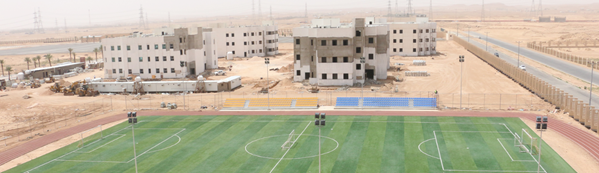
His Excellency the University President, Dr. Khalid bin Saad Al-Muqrin, accompanied by His Excellency the University Vice President for Academic Affairs, Dr. Ahmed bin Ali Al-Rumaih, and a number of college deans, inaugurated sports fields in Al-Majma'ah, which are considered one of the most important pillars for our students.
He was received by the General Supervisor of the General Administration of Projects and Technical Affairs, Mr. Othman bin Hamad Al-Essa, and Mr. Mohammed bin Suleiman Al-Funaitel, the project supervisor.
His Excellency inspected the stadiums and their equipment.
His Excellency then sponsored the final match of the football sports activities.
His Excellency then honored the General Administration of Projects and Technical Affairs for their efforts in constructing the stadium in accordance with international standards for the construction of sports stadiums.
The university's commitment to sports fields stems from its belief that sports are an important part of human life. The fields have been designed to a high standard of standards to meet the needs of students, faculty members, and university staff.
The University Signs a Memorandum of Understanding with the General Sports Authority
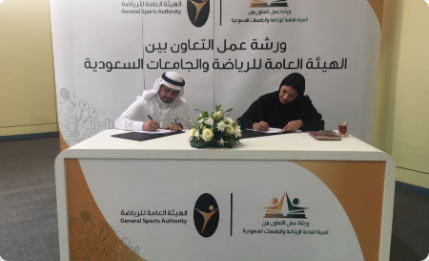
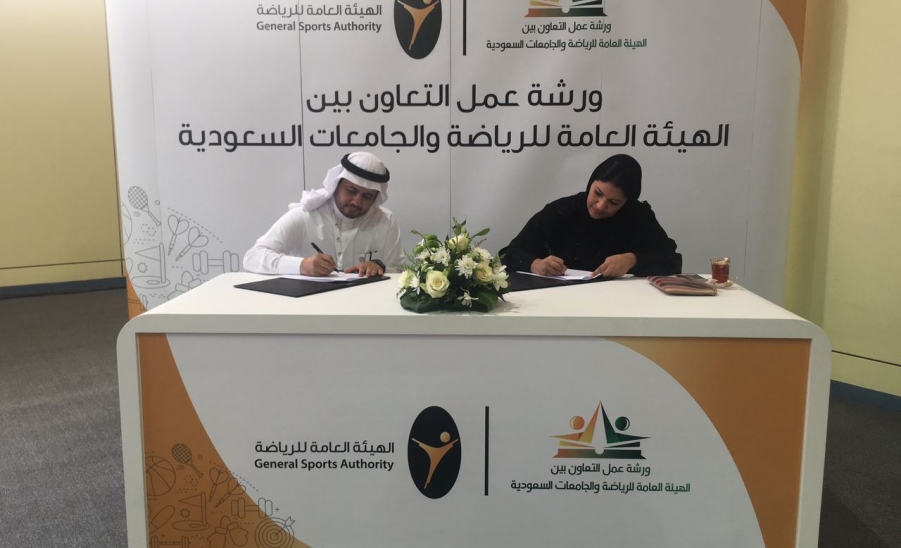
The university signed a memorandum of understanding with the “General Authority for Sports”, on Monday, 20/7/1438 AH, on cooperation in achieving the required support, implementing programs and activities that help spread the culture of sports, and activating the role of parties in achieving Vision 2030, in order to increase the percentage of sports and physical activities on a regular basis, and raise awareness in the community of sports and public health, and the university was represented in signing the agreement by His Excellency the Vice President for Educational Affairs, Dr. Ahmed bin Ali Al-Rumaih, and The General Sports Authority was represented by Her Royal Highness Princess Reema bint Bandar bin Sultan, Vice President of the Authority for the Women's Section.
The memorandum included a number of objectives, including: contributing to achieving the Kingdom’s Vision 2030, identifying means to increase the percentage of sports and physical activities on a regular basis to raise the percentage of sports practitioners, developing mechanisms that motivate community groups to practice sports, achieving a distinguished and sustainable sports level, determining the mechanism for spreading the culture of sports awareness and healthy behaviors by the university for all its students and community members, achieving the university’s vision in qualifying specialized human cadres related to development needs, and applying research projects. Sports service in the Kingdom is joint between the university and the authority, as well as one of the objectives is to support the sports economy through community sports, and to add sports events at the university to the sports calendar, in addition to spreading the culture of sports practice and the culture of training and sports volunteering.
-
Accessibility and Inclusion:
MU ensures its sports facilities are accessible to people with disabilities and diverse groups. When MU built new outdoor sports fields in 2018, they were constructed “according to international standards” mu.edu.sa, which implies compliance with accessibility norms (e.g. ramps, seating, and amenities for individuals with reduced mobility). The university’s policies explicitly promote an inclusive environment: “all individuals can participate fully in academic and social life”, regardless of disability m.mu.edu.sa. This commitment extends to recreational life. MU’s Deanship of Student Affairs operates a Disability Care Center that organizes sports and cultural activities encouraging full participation of students with disabilities mu.edu.sa. For instance, the center hosts adapted sports competitions and provides assistive services so that students with physical or sensory disabilities can use campus facilities and stay active. While most documented initiatives focus on MU students, community inclusion is a priority – MU’s public sports events are open to all, and the campus is equipped to welcome attendees with special needs. In summary, MU’s approach to facility sharing emphasizes access for women and men of all abilities, ensuring that community sports programs are inclusive and aligned with the university’s equal-opportunity policies m.mu.edu.sa.
Disability care center
Vision:
To provide high-quality services to students to help them to engage in academic life.
Mission:
To achieve a positive impact globally through innovation and continuous development in the field of care for people with disabilities.
Goals:
Integrate students into the academic community by providing the necessary support and encouraging positive interaction.
Services:
Psychological and social consultations:
· Expand the scope of counseling to include specialized psychological and social support.
Programs and activities:
· Expand the scope of cultural and social programs to hold activities aimed at encouraging the full participation of students with disabilities.
Sports and cultural competitions:
· Conduct sports and cultural competitions and events that allow for social interaction among students.
Services provided in cooperation with information technology:
· Provide modern technology and technical assistance to facilitate access to study materials and improve interaction with the academic environment.
Services provided in cooperation with the Student Skills and Values Development Center:
· Conduct training programs and workshops that enhance students’ skills in various fields.
· Courses in learning sign language.
Services provided in cooperation with the General Administration of Facilities:
· Provide supportive infrastructure to meet students' needs.
Services provided in cooperation with the Alumni Center:
· Employment and training programs to engage students with disabilities into the labor market.
Services provided in cooperation with the Student Fund:
· Provide financial subsidies.
· Provide financial advances.
· Provide financial support to purchase assistive devices for students with disabilities.
· Provide an educational assistant when needed or requested.
Center tasks:
Interact with policies and regulations:
· Implement relevant legislation and policies to protect the rights and well-being of students with disabilities.
Monitor and evaluate performance:
· Evaluate the effectiveness of the services provided and improve them.
· Get feedback and reports on students' progress and needs.
Awareness and education:
· Educate members of the university community about issues of people with disabilities.
· Hold educational activities for students and employees about understanding the needs of individuals with disabilities.
Categories benefiting from the center:
· Students with learning difficulties.
· Students who suffer from attention disorders and excessive motor activity.
· Students who suffer from emotional and behavioral disorders.
· Students with autism spectrum disorders.
· Students with congenital abnormalities.
· Students with hearing disabilities.
· Students with visual impairment.
· Students with physical and health disabilities.
Free Access vs. Charged Access
MU distinguishes between free community access and fee-based use of its sports facilities, depending on the program or arrangement:
-
Free Access:
Many community-oriented sports events at MU are offered free of charge as part of the university’s social responsibility. Public tournaments and one-off events are generally open and free for participants or spectators. For example, when MU sponsors or hosts local sports events – such as the equestrian race days or the sports symposium – it does so as a community service, with no admission fees for attendeesmu.edu.samu.edu.sa. Similarly, the MU Marathon and other on-campus sports competitions involving the community are free to enter; in fact, MU often provides prizes or covers costs to encourage participation (the marathon winners received medals and cash prizes funded by the university)mu.edu.samu.edu.sa. MU also supports local schools and youth clubs without charge – the “Graceful Al-Ghat” fitness program was offered to participants for free, leveraging a school venue and university staff expertise at no cost to the publicmu.edu.sa. These free-access initiatives include public sports days, tournaments, fitness workshops, and open-campus events that MU either hosts or sponsors for community benefit.
-
Charged Access: In some cases, MU provides ongoing sports services to the public on a paid or membership basis. The primary example is the Majmaah University Sports Club (Gym), a full-service fitness center on campus. This university gym “serves university members and the local community” and is designed to promote a healthy lifestyle in the region mu.edu.sa. Community members can join the gym via memberships, which generates revenue that supports the university mu.edu.sa. Thus, while the facility is open to the public, it operates on a fee-based model (monthly or annual subscriptions), similar to a commercial fitness club. MU explicitly notes that this club “contributes to generating additional revenue for the university” mu.edu.sa, indicating that access is paid (with affordable fees) rather than free. Aside from the gym, certain long-term arrangements might involve cost recovery or fees. If local organizations formally rent university fields or courts for recurring use (e.g. a local league using a football pitch), it would typically be under a rental or MoU agreement – sometimes at a symbolic charge or in-kind contribution. For instance, MU’s agreement with Al-Fayha Club likely involves mutual benefits; community club athletes might get access to MU’s sports science facilities, and in return MU students gain training opportunities mu.edu.sa. However, the majority of documented community uses are free or university-sponsored. MU tends to waive fees for educational/sports collaborations as part of its community service mission, while charging modest fees for individual public use of its fitness facilities or other revenue-generating sports services.
One‑Time Events vs. Regular Use
Majmaah University’s community engagement in sports covers both one-off events and long-term or recurring use agreements:
-
One-Time & Occasional Events:
MU frequently opens its facilities for single events or short-term activities that involve the community. These include sports tournaments, races, and festivals hosted on campus on an occasional basis. Examples:
-
Tournaments & Championships:
MU has hosted inter-university sports championships (like the 2024 basketball finals) as a one-time event that brought external teams and community spectators to campus mu.edu.sa. It also concludes annual internal championships with fanfare – e.g. the Rector’s Cup finals in futsal – and invites community members (such as local school officials or club representatives) as guests, though these are primarily student competitions mu.edu.sa.
-
Community Sports Days:
The equestrian race days sponsored by MU occur periodically (e.g. the “23rd Equestrian Club race” and others in that series). Each race day is a distinct event where MU’s involvement (prizes, officials, patronage) is for that day, making it a recurring tradition but executed as individual events mu.edu.samu.edu.sa. Likewise, the sports symposium with Al-Faisaly Club was a single-day forum mu.edu.sa. MU’s marathon event was organized as a one-day race on campus; although it may become an annual occurrence, the inaugural marathon in 2018 was a standalone event with 180 participants from various university and local teams mu.edu.sa.
-
Festivals & Clinics:
Short-term programs like sports clinics or fitness workshops also fall here. The “Sports for All” clinic or fitness competition in Al-Ghat (2017) ran for 45 days mu.edu.sa – a defined period after which it ended. MU might repeat such programs in the future, but each iteration is time-bound. These occasional events are often tied to international days or local festivals, maximizing community engagement at specific times.
-
Long-Term & Regular Use:
Beyond events, MU supports sustained, regular access to sports facilities for the community through ongoing programs and agreements:
-
Daily/Continuous Access:
The University’s Sports Club (gym) is an everyday resource where community members have continuous access via membership. Local residents use the gym daily alongside students and staff mu.edu.sa. This is a stable, year-round avenue for community engagement in sport and exercise.
-
Recurring Partnerships:
MU’s formal agreements suggest regular or repeated collaborations. The MoU with the General Sports Authority led to integrating MU into national fitness initiatives (e.g. hosting a series of events rather than a single event) mu.edu.sa. Similarly, partnerships with sports clubs (Al-Fayha, equestrian club, etc.) indicate recurring use – for example, MU sponsoring an equestrian cup each season, or providing its facilities/expertise to club youth academies on an ongoing basis. Indeed, MU notes that its equestrian club partnership is “the start of future equestrian participations” mu.edu.sa, implying a sustained series of events.
-
After-School and League Use:
Although not heavily publicized, MU’s community partnerships enable long-term use such as after-school sports programs. Local schools (including MU’s own affiliated K-12 school) have collaborated with MU over multiple years. MU’s University Pioneers School was even thanked for hosting some university futsal matches mu.edu.sa, reflecting a reciprocal relationship where school and university facilities support each other. This closeness suggests that MU’s sports fields could likewise be made available for school sports days or local youth leagues on a regular schedule. Moreover, MU’s past work with youth welfare offices and regional sports clubs covered all governorates under MU’s service area mu.edu.sa, which implies an ongoing outreach structure (e.g. annual sports events in Majmaah, Zulfi, Ghat, and Hawtat Sudair, where MU has campuses). These are long-term community engagement efforts rather than one-off occurrences.
-
Continuous Health Programs:
Some community health/sports programs initiated by MU are designed to be repeatable or ongoing. If the 45-day Al-Ghat fitness program proved successful, MU can run it regularly (annually or biannually) to keep engaging the public in exercise. Likewise, MU’s Sports Club gym is positioning itself as the seed of a larger “integrated sports zone” on campus mu.edu.sa – a long-term development that will likely include public sports courts, tracks, and leagues in the future.
In summary, Majmaah University demonstrates a strong commitment to sharing its sports facilities and programs with the local community. From free public events (marathons, club tournaments, school programs) to structured paid services (community gym memberships), MU balances its role as an educational institution and a community sports hub. Occasional high-profile events and sustained partnerships both play a role in this strategy. The evidence from 2018–2025 shows that MU’s stadiums, halls, and recreational centers are not only serving students but also benefit local schools, sports clubs, government initiatives, and people of all abilities in the surrounding community mu.edu.sa mu.edu.sa. This multifaceted approach – encompassing free vs. paid access and one-time vs. long-term use – underpins MU’s contribution to the Times Higher Education Impact Rankings goals of community engagement and well-being through sport.

شارك برأيك وساهم في تحسين خدماتنا.
أعجب 0 من 297 زائر بمحتوى الصفحة. (0% مؤشر رضا الزوار)