
موقع حكومي رسمي تابع لحكومة المملكة العربية السعودية


تنتهي روابط الموقع الرسمي للحكومة السعودية بـ gov.sa
جميع روابط المواقع التعليمية الرسمية في المملكة العربية السعودية تنتهي بـ sch.sa أو edu.sa

تستخدم المواقع الحكومية HTTPS بروتوكولًا للتشفير والأمان.
المواقع الآمنة في المملكة العربية السعودية تستخدم بروتوكول HTTPS للتشفير.



SDG17.2.4Reviewing comparative approaches and develop international best practice on tackling the SDGs
 نُشِر في 2024-10-29
Updated 30/10/2025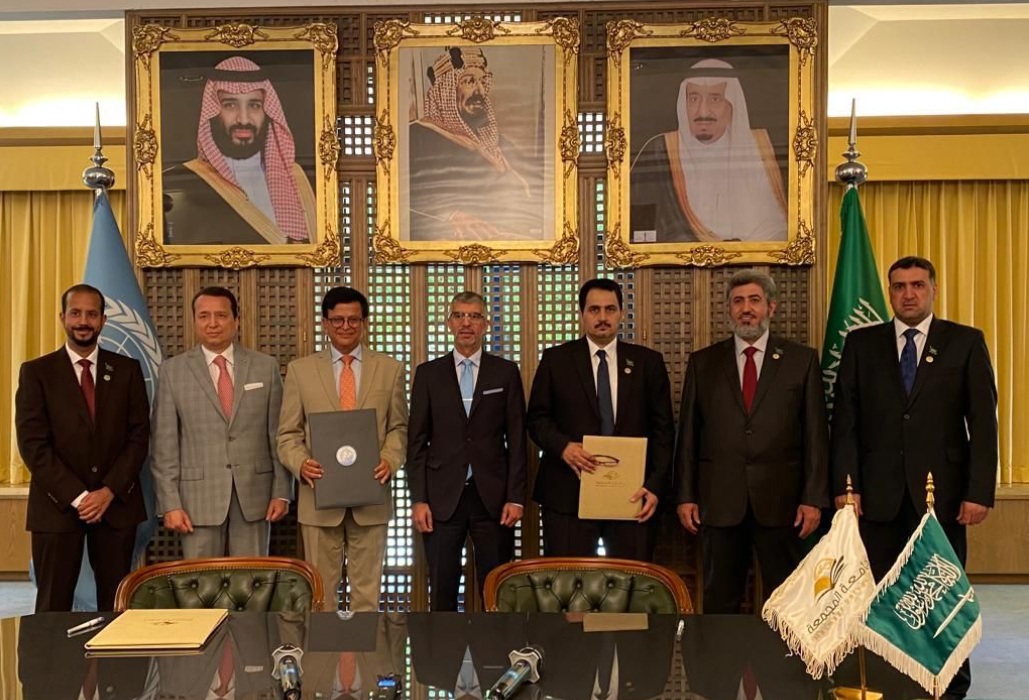
17.2.4Majmaah University’s International Collaboration and SDG Best Practices
Majmaah University (MU) actively engages in international collaboration and research to review various approaches toward the UN Sustainable Development Goals (SDGs) and develop international best practices. Through global partnerships, research and educational collaborations, and student-focused initiatives, the university learns from comparative approaches around the world and integrates those insights into its own strategies. Below we outline how MU participates in international collaborations supporting the SDGs, fosters internal and external partnerships in research and education, and leverages these collaborations to enhance student knowledge and the university’s research practices.
Global Partnerships Supporting the SDGs
Majmaah University pursues partnerships with international organizations and networks that facilitate sharing of knowledge and best practices on sustainable development. For example, MU’s leadership signed a service agreement with the United Nations Institute for Training and Research (UNITAR) to establish a CIFAL training center in Saudi Arabia – part of a global network of 24 centers dedicated to capacity-building for sustainable development mu.edu.sa mu.edu.sa. This agreement enhances joint work on SDG initiatives and signifies MU’s commitment to the UN 2030 Agenda through training, research, and advisory services in areas of common interest mu.edu.sa mu.edu.sa. The University also participates in high-level United Nations forums on sustainability in higher education. The Saudi CIFAL Center at MU took part in a UN High-Level Political Forum side event (co-organized by UNITAR and UNESCO) where education leaders from over 10 countries discussed how universities can drive progress on the SDGs through interdisciplinary learning and innovation mu.edu.sa mu.edu.sa. By engaging in such global dialogues, MU both reviews comparative approaches used by various institutions and contributes to shaping international best practices. Notably, at the Higher Education for Sustainability Initiative (HESI) Forum 2024, MU’s Vice-Rector was a speaker in discussions on the future of higher education for sustainable development mu.edu.sa. The forum’s outcomes included recommendations and strategies to draft new policies and practices supporting sustainable development in higher education worldwide mu.edu.sa. This exemplifies how MU is directly involved in developing international best practices for tackling the SDGs in academia. In fact, MU even facilitates the exchange of expertise by sending its faculty and administrators to visit leading universities abroad to learn from their successful academic and management methods, bringing back those insights to improve its own programs mu.edu.sa. Such global engagements ensure that Majmaah University stays at the cutting edge of sustainable development strategies and can implement proven approaches gleaned from international peers.
The President of Majmaah University signs a services agreement with the United Nations Institute for Training and Research.
His Excellency the Permanent Representative of the Kingdom of Saudi Arabia to the United Nations in Geneva, Ambassador Dr. Abdulaziz bin Mohammed Al-Wasil, received in his office a delegation from Majmaah University headed by His Excellency the President of the University, Professor Dr. Saleh bin Abdullah Al-Muzal, and the participating delegation from the university. During the meeting, the university’s efforts and areas of cooperation with the United Nations were reviewed, reflecting the Kingdom’s international efforts and its interaction with the international community.
During the meeting, Ambassador Dr. Al-Wasil praised the great efforts made by the university, especially with regard to highlighting the Kingdom’s efforts and the great strides it has made in implementing the 2030 Sustainable Development Goals.
During the meeting, a training, research and advisory services agreement was signed with the United Nations Institute for Training and Research (UNITAR) in Geneva to enhance cooperation in areas of common interest in training, development and research and to promote joint action in achieving the United Nations Sustainable Development Goals. The agreement was signed by the President of Majmaah University, Professor Dr. Saleh bin Abdullah Al-Mazal, and the Assistant Secretary-General of the United Nations and Executive Director of the United Nations Institute for Training and Research (UNITAR), Mr. Nikhil Seth, in the presence of His Excellency the Permanent Representative of the Kingdom of Saudi Arabia to the United Nations in Geneva, Dr. Ambassador Dr. Abdulaziz Al-Wasil, and the University’s Vice-Rector, Professor Dr. Musallam bin Mohammed Al-Dosari, the University President’s Advisor, Dr. Abdulaziz Al-Rashoud, and Dr. Ayman Jameel Al-Barakati.
The agreement aims to establish the Cefal Center in the Kingdom of Saudi Arabia. The center will represent the United Nations Institute for Training and Research (UNITAR) from its headquarters in the Kingdom and will contribute to promoting the 2030 Agenda for the United Nations. The center will also specialize in supporting sustainable development.
The Cefal Center in Saudi Arabia joins the 24 centers in the global Cefal network, whose mission is to enhance the capacities of government officials and civil society leaders and empower them to advance sustainable development. The network consists of international training centers for bodies and leaders across Asia, Oceania, Africa, Europe, the Americas, and the Caribbean. These centers provide innovative learning solutions for individuals, organizations, and institutions to enhance global decision-making and support national action to shape a better future.
Mr. Seth, Executive Director of the United Nations Institute for Training and Research, explained that the service agreement with the university will develop joint work to support the implementation of the Institute's strategy and the implementation of various capacity-building activities in the areas of cybersecurity, youth empowerment, and enhancing joint action to achieve the United Nations goals and other activities related to sustainable development, as well as developing human capital.
For his part, His Excellency the President of Majmaah University expressed the university’s pride in signing this agreement with the United Nations Institute for Training and Research, considering it a culmination of joint work and an affirmation of Majmaah University’s commitment to supporting the United Nations Global Strategy to achieve its 2030 Sustainable Development Goals and to support and build national capacities to play a major and important role in the wheel of development, progress and prosperity that the Kingdom of Saudi Arabia is experiencing under the leadership of the Custodian of the Two Holy Mosques, King Salman bin Abdulaziz Al Saud, and His Royal Highness the Crown Prince, Prince Mohammed bin Salman bin Abdulaziz Al Saud, may God protect them.
SAUDI CIFAL CENTER PARTICIPATES IN A UN SIDE EVENT
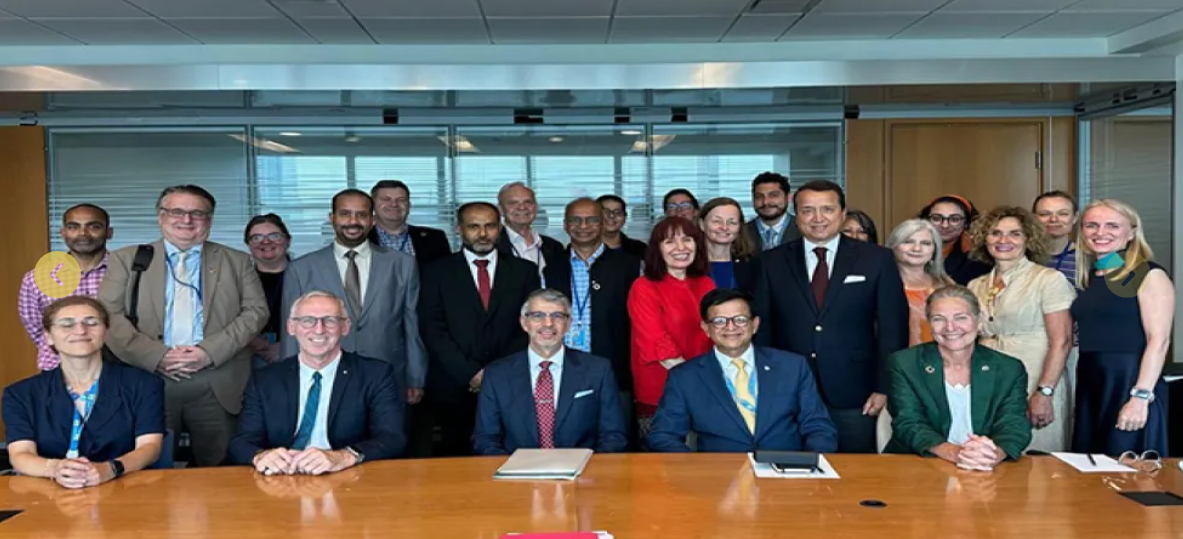
official side event organized by the United Nations Institute for Training and Research (UNITAR) and UNESCO, which was held at the High-Level Political Forum (HLPF) under the theme: Higher Education Institutions as Vital Partners in Designing and Delivering Sustainable, Resilient and Innovative Solutions".
The Permanent Representative of Saudi Arabia to the United Nations, Ambassador Dr. Abdulaziz Al-Wasil, attended the event which discussed how higher education institutions can play a pivotal role in achieving the Sustainable Development Goals (SDGs) through interdisciplinary learning, knowledge-based and community-oriented actions, and integrating sustainability as a core objective of education and research.
Education leaders from over 10 countries to discuss ways forward in making future policies for higher education institutions. Among the attendees were the Executive Director of the United Nations Institute for Training and Research - Assistant Secretary-General of the United Nations - Nikhil Seth, in addition to a group of presidents of international universities such as: Victoria University, Newcastle University, and high-level representatives from United Nations organizations and the governments of Ireland, Finland, and Croatia.
MU was represented in this event by the Vice-Rector for Graduate Studies and Scientific Research, Prof. Muhammad Al-Shehri, and the Director of the Saudi Cifal Center, Dr. Ayman Al-Barakati, who pointed out that the support of MU's rector and the Chairman of Cifal Council has played a role in allowing the center to participate in such events.
MU PARTICIPATES IN THE HIGHER EDUCATION FOR SUSTAINABILITY FORUM
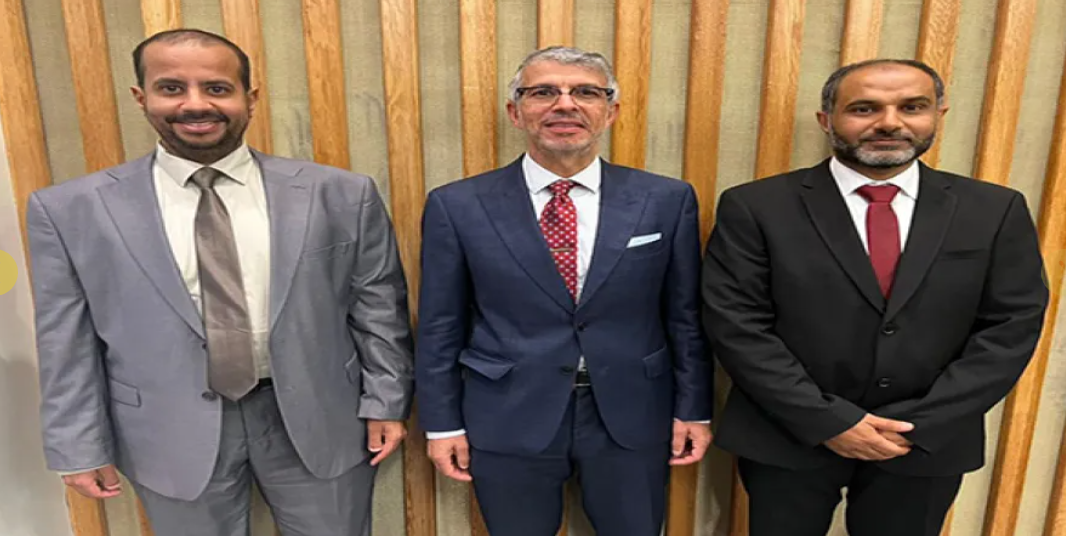
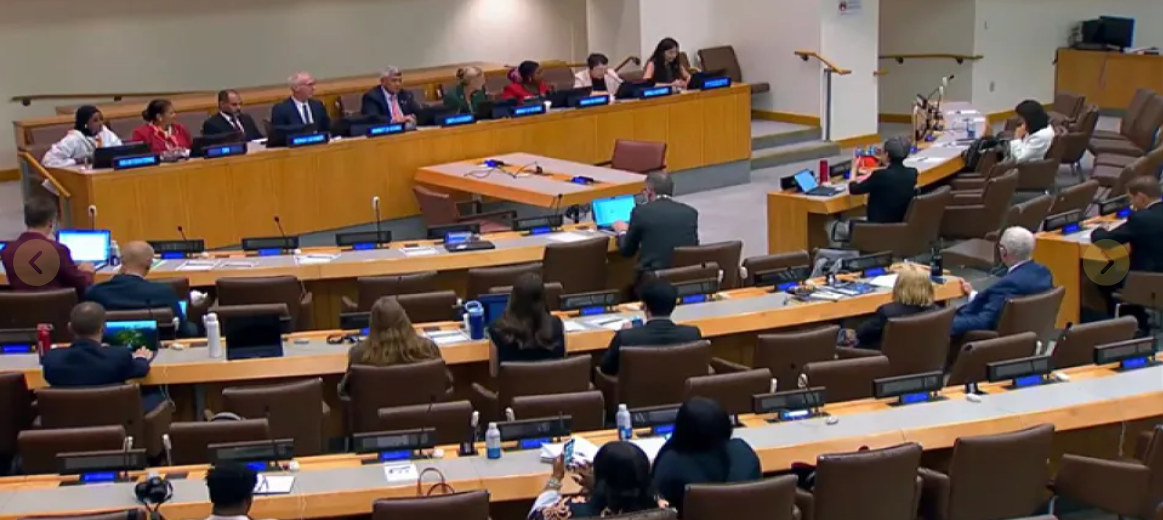
At the request of MU Rector and the Chairman of the Board of Directors of the Saudi Cifal Center, Prof. Saleh Al-Mezal - MU participated in the Higher Education for Sustainability Forum (HESI) 2024, which was held as a special event under the High-Level Political Forum (HLPF). The event aims to follow up and review the 2030 Agenda for Sustainable Development.
The event was attended by His Excellency the Permanent Representative of the Kingdom to the United Nations, Ambassador Dr. Abdulaziz Al-Wasil, and high-level representatives from international organizations and governments. Prof. Mohammed Al-Shehri, the Vice-Rector for Graduate Studies and Scientific Research, represented MU as a speaker in this event.
The event focused on "The Future of Higher Education for Sustainable Development" and addressed the intersection between education, innovation, and sustainability, with a focus on the impact of artificial intelligence and other emerging technologies amid the challenges facing the progress of achieving the Sustainable Development Goals (SDGs).
The event acted as a preparatory platform for future initiatives to be promoted or launched at the Future Summit 2024. The recommendations and strategies resulted from the forum will contribute to drafting policies and practices supporting action plans for sustainable development in higher education.
The forum asserts the vital role of transforming higher education institutions to keep pace with dynamic global changes and an unpredictable future, valuing local knowledge and partnerships, promoting sustainable and equitable development around the world.
All the areas that higher education institutions can possibly contribute to achieving their Sustainable Development Goals using emerging technologies were mentioned, including artificial intelligence
Department of International Cooperation and Internal Agreements
Introducing the international cooperation programs available at the university level and ways to benefit from them and activate the university's membership in various international organizations.
Suggest mechanisms and procedures to follow up and activate the benefit from the aspects of cooperation mentioned in the terms of agreements and memorandums of understanding at the university level.
Proposing areas of cooperation related to academic accreditation with some leading universities and academic institutions through partnership and agreements with them.
Preparing studies to conclude agreements with other Arab and international universities.
Studying contracts concluded with external parties, submitting proposals and recommendations, and submitting them for approval
Follow-up and supervision of agreements with Arab and international universities or academic institutions.
Organizing visits for faculty members and administrators to leading Arab and international universities to learn about their experiences in developing their academic programs, teaching and management methods, and to benefit from their distinguished experiences.
Supervising the process of receiving visiting delegations in coordination with the Public Relations and Media Unit at Majmaah University.
Follow up the activation of internal agreements and ways to benefit from them.
Research, Educational, and Training Collaborations
MU has built extensive partnerships both internationally and domestically to advance research, education, and training aligned with sustainable development objectives. These internal and external collaborations span universities, industry, government, and non-profits, forming a strong network in support of the SDGs. Key collaboration types include:
-
Global Research Collaborations:
Majmaah University engages in research partnerships with other universities, research centers, and international organizations, promoting the two-way exchange of knowledge and expertise in fields such as environmental sustainability, healthcare, technology, and education m.mu.edu.sa. By pooling resources and insights across borders, these collaborative projects help solve global challenges while also advancing Saudi Arabia’s development priorities m.mu.edu.sa m.mu.edu.sa. For instance, MU researchers jointly published a high-impact study with the University of Hong Kong examining COVID-19’s effects across 30 countries – a truly international research effort that contributes to global health knowledge (SDG 3) mu.edu.sa mu.edu.sa. Such collaborations position MU as an active contributor to worldwide research on sustainability and public well-being.
Research Collaborations:
Majmaah University engages in research collaborations with other universities, research centers, and international organizations. These partnerships promote the exchange of knowledge, expertise, and resources in areas such as environmental sustainability, healthcare, technology, and education. Collaborative research projects contribute to solving global challenges while advancing national development priorities.
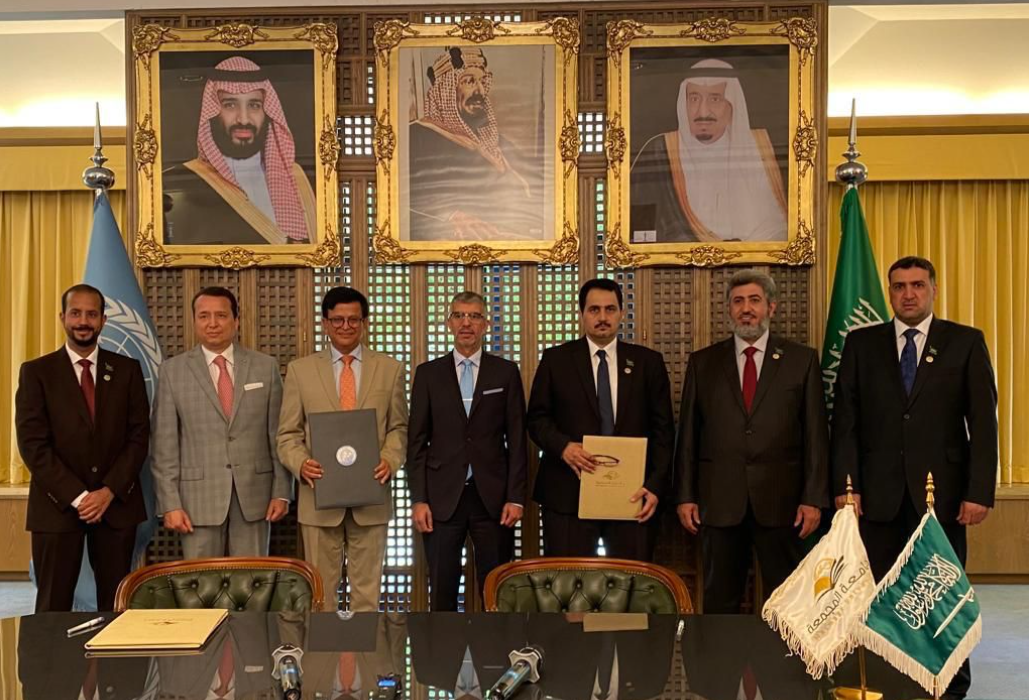
The President of Majmaah University signs a services agreement with the United Nations Institute for Training and Research.
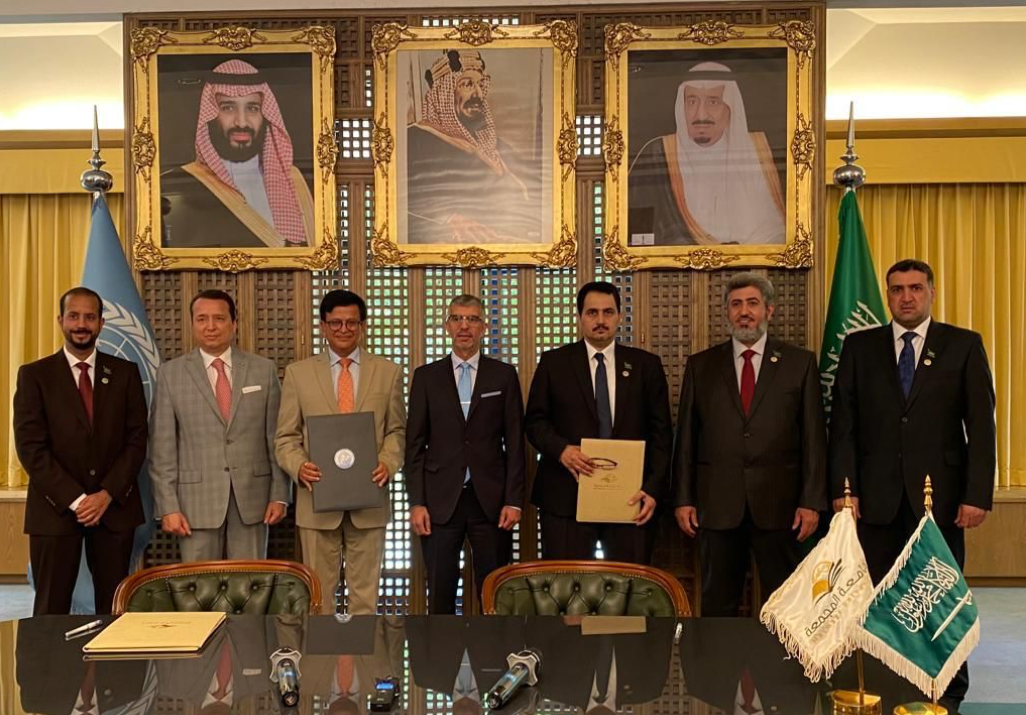
His Excellency the Permanent Representative of the Kingdom of Saudi Arabia to the United Nations in Geneva, Ambassador Dr. Abdulaziz bin Mohammed Al-Wasil, received in his office a delegation from Majmaah University headed by His Excellency the President of the University, Professor Dr. Saleh bin Abdullah Al-Muzal, and the participating delegation from the university. During the meeting, the university’s efforts and areas of cooperation with the United Nations were reviewed, reflecting the Kingdom’s international efforts and its interaction with the international community.
During the meeting, Ambassador Dr. Al-Wasil praised the great efforts made by the university, especially with regard to highlighting the Kingdom’s efforts and the great strides it has made in implementing the 2030 Sustainable Development Goals.
During the meeting, a training, research and advisory services agreement was signed with the United Nations Institute for Training and Research (UNITAR) in Geneva to enhance cooperation in areas of common interest in training, development and research and to promote joint action in achieving the United Nations Sustainable Development Goals. The agreement was signed by the President of Majmaah University, Professor Dr. Saleh bin Abdullah Al-Mazal, and the Assistant Secretary-General of the United Nations and Executive Director of the United Nations Institute for Training and Research (UNITAR), Mr. Nikhil Seth, in the presence of His Excellency the Permanent Representative of the Kingdom of Saudi Arabia to the United Nations in Geneva, Dr. Ambassador Dr. Abdulaziz Al-Wasil, and the University’s Vice-Rector, Professor Dr. Musallam bin Mohammed Al-Dosari, the University President’s Advisor, Dr. Abdulaziz Al-Rashoud, and Dr. Ayman Jameel Al-Barakati.
The agreement aims to establish the Cefal Center in the Kingdom of Saudi Arabia. The center will represent the United Nations Institute for Training and Research (UNITAR) from its headquarters in the Kingdom and will contribute to promoting the 2030 Agenda for the United Nations. The center will also specialize in supporting sustainable development.
The Cefal Center in Saudi Arabia joins the 24 centers in the global Cefal network, whose mission is to enhance the capacities of government officials and civil society leaders and empower them to advance sustainable development. The network consists of international training centers for bodies and leaders across Asia, Oceania, Africa, Europe, the Americas, and the Caribbean. These centers provide innovative learning solutions for individuals, organizations, and institutions to enhance global decision-making and support national action to shape a better future.
Mr. Seth, Executive Director of the United Nations Institute for Training and Research, explained that the service agreement with the university will develop joint work to support the implementation of the Institute's strategy and the implementation of various capacity-building activities in the areas of cybersecurity, youth empowerment, and enhancing joint action to achieve the United Nations goals and other activities related to sustainable development, as well as developing human capital.
For his part, His Excellency the President of Majmaah University expressed the university’s pride in signing this agreement with the United Nations Institute for Training and Research, considering it a culmination of joint work and an affirmation of Majmaah University’s commitment to supporting the United Nations Global Strategy to achieve its 2030 Sustainable Development Goals and to support and build national capacities to play a major and important role in the wheel of development, progress and prosperity that the Kingdom of Saudi Arabia is experiencing under the leadership of the Custodian of the Two Holy Mosques, King Salman bin Abdulaziz Al Saud, and His Royal Highness the Crown Prince, Prince Mohammed bin Salman bin Abdulaziz Al Saud, may God protect them
-
Academic and Educational Partnerships:
The university has established partnerships with national and international educational institutions to enhance its academic programs, create joint research initiatives, and promote student and faculty exchanges m.mu.edu.sa. These collaborations enrich MU’s curriculum and research capacity, while providing opportunities for students and staff to engage in global learning experiences and co-develop sustainable development solutions m.mu.edu.sa. By aligning academic programs with international standards and expertise, MU ensures its teaching and research stay relevant to global best practices. The university also actively participates in academic networks focused on sustainability – collaborating with peer institutions worldwide on education and research initiatives and sharing innovative solutions for common challenges m.mu.edu.sa. Participation in such international networks and consortia enables continuous benchmarking of MU’s approaches against global norms and contributes to collective knowledge on effective SDG strategies.
Educational Partnerships:
The university has established partnerships with national and international educational institutions to enhance academic programs, promote student exchanges, and develop joint research initiatives. These collaborations provide opportunities for students and faculty to engage in global learning experiences and contribute to sustainable development solutions.
Participation in National and International Networks:
Majmaah University is an active participant in national and international academic networks. These networks allow the university to collaborate with global institutions on research, education, and sustainability initiatives. By being part of these networks, the university contributes to knowledge-sharing platforms and the development of innovative solutions for global challenges.
-
Industry and Government Partnerships:
Majmaah University works closely with external partners in the private and public sectors to connect academia with real-world development needs. Forming strategic partnerships with industries and government agencies creates training, internship, and research opportunities that benefit both students and faculty mu.edu.sa mu.edu.sa. For example, MU’s leadership partnered with BAE Systems (a global engineering firm) to collaborate in education, research, and innovation, aiming to empower students in research and support Saudi Vision 2030’s goals mu.edu.sa. The MU Rector emphasized that such partnerships help create training opportunities for students and staff – a commitment the university has upheld since its founding mu.edu.sa. Similarly, MU collaborates with national government bodies to advance sustainable development priorities; notably, it worked with the Ministry of Interior to deliver a training program titled “Expert in the Applications of the UN SDGs 2030” for regional government officials mu.edu.sa. By engaging with government and industry on SDG-related training and R&D projects, the university helps translate research into practice and ensures its academic efforts directly contribute to society’s sustainable development.
These diverse internal and external partnerships illustrate MU’s comprehensive approach: from international research projects to educational exchange agreements and public-private partnerships, the university actively bridges sectors and borders. This not only amplifies MU’s impact on the SDGs but also aligns its activities with Vision 2030, Saudi Arabia’s roadmap for sustainable national development m.mu.edu.sa m.mu.edu.sa.
The University and the Ministry of Interior are implementing the development program "United Nations Sustainable Development Goals 2030 Applications Expert"
As part of the university’s initiative to promote positive concepts of the United Nations Sustainable Development Goals 2030, and in line with the requirements of the Kingdom’s Vision 2030, the university, represented by the university’s agency, implemented the training program “Expert in Applications of the United Nations Sustainable Development Goals 2030.” The program was directed at leaders of the Ministry of Interior, including undersecretaries of the regions’ emirates for development affairs, governors, and general managers of development departments in the emirates and governorates of the Kingdom’s regions. The program was held at the Ministry of Interior Officers Club in Riyadh over a period of five days, concluding with a test to determine the level of achievement of the participants in this program.
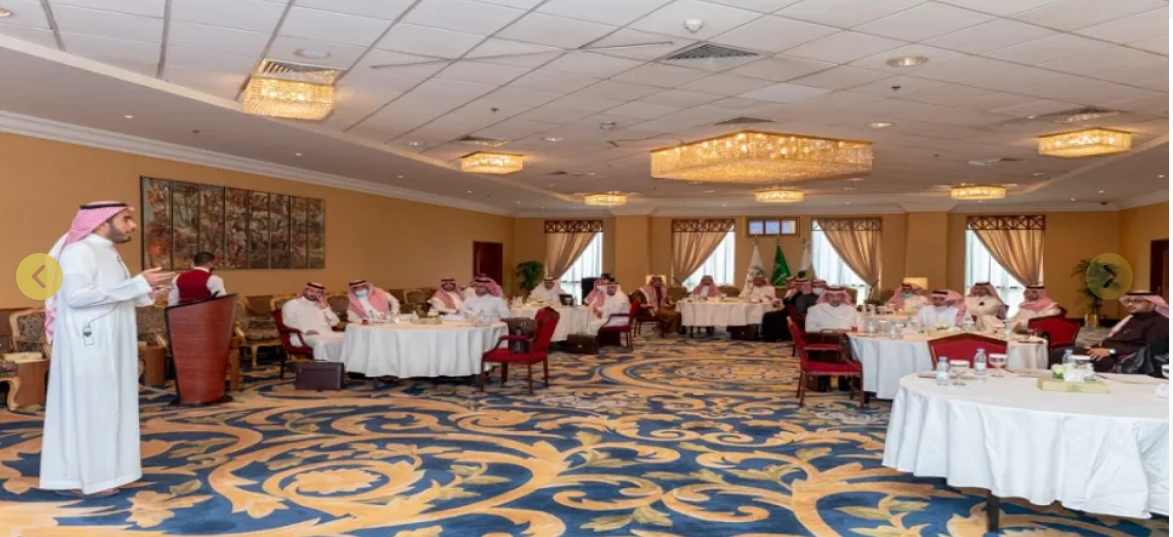
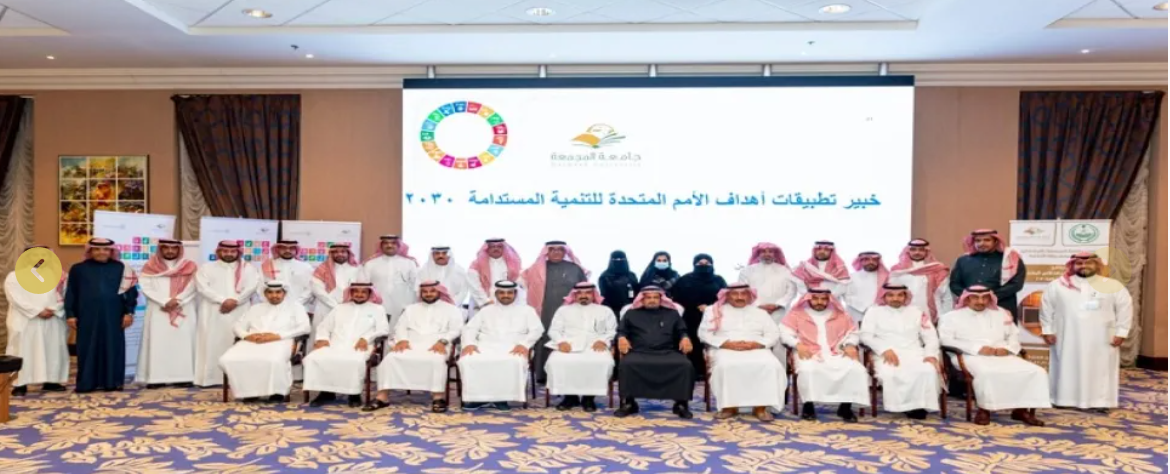
For his part, His Excellency the University Vice-Rector, Prof. Dr. Musallam bin Mohammed Al-Dosari, stated that this program comes under the directives of His Excellency the University President, Prof. Dr. Saleh bin Abdullah Al-Mizal, and his emphasis on activating qualitative programs that serve the developmental directions of the state, in order to achieve the requirements of the Kingdom’s Vision 2030. He pointed out that the interest of the Ministry of Interior and the nomination of advanced leaders in the Ministry concerned with development work is an addition to the importance and reliability of this program, and an affirmation of the soundness of the university’s vision in this field. The University Vice-Rector concluded his statement by extending his thanks to the General Administration of Human Resources at the Ministry of Interior for its cooperation with the university in implementing this program, and to the Institute of Studies and Consulting Services for its role in managing the implementation of this program, wishing His Excellency success to the program team.
It is worth noting that this program was launched by the University's Social Responsibility Observatory, with the support of the University's General Administration of Administrative and Financial Affairs in 2018. Through this program, the University's team was built in the field of global goals, and it received praise from the presidents of universities and higher education institutions in the Gulf Cooperation Council countries. The twenty-first meeting of the University Presidents Committee recommended emphasizing the importance of benefiting from this initiative at the level of universities and higher education institutions in the GCC countries. It also received the attention of a number of ministries and various development institutions.
MU RECTOR WELCOMES THE VICE-PRESIDENT OF BAE SYSTEMS
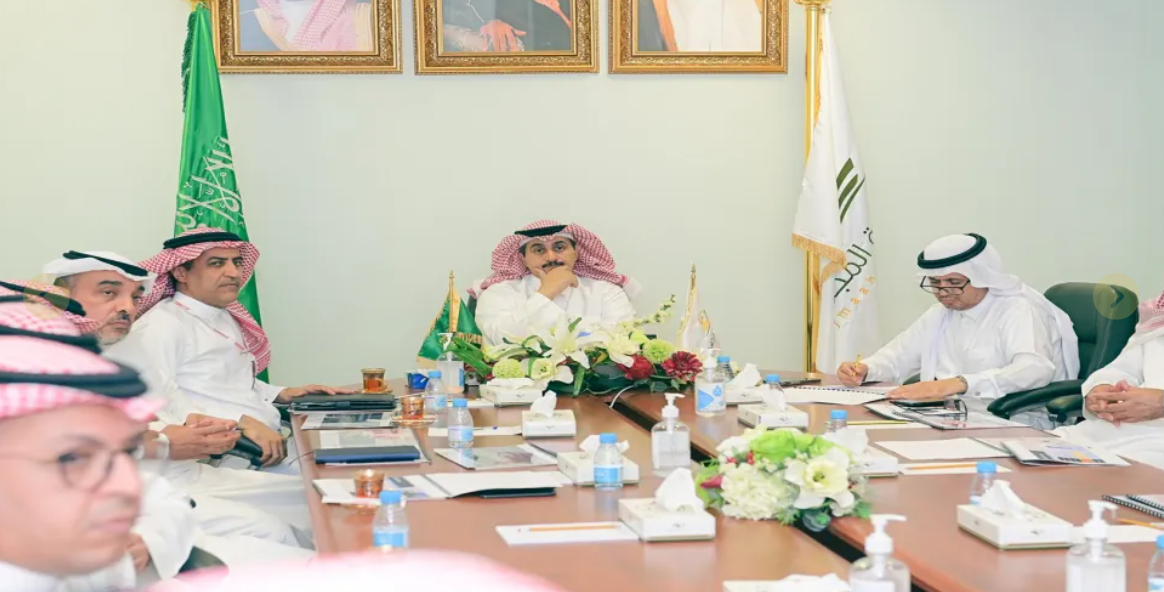
Prof. Saleh Al-Mizil, MU's rector, welcomed the Vice President of BAE Systems for Engineering, Eng. Khaled Al-Otaibi, to discuss a number of projects between between both sides in the research, educational, and industrial fields. This visit also aims to empower students in research and innovation to serve the vision of the Kingdom 2030.
MU's rector, Prof. Al-Mizil, highlighted the importance of forming strategic partnerships with industrial companies and institutions to create more training opportunities for students and faculty members, an act that is committed by the university since its establishment as a leading educational institution.
Eng. Al-Otaibi, pointed out that BAE Systems is very keen to collaborate with MU in the field of education, research and innovation.
Prof. Ahmed Al-Rumaih, the vice-rector for postgraduate studies and scientific research, commended this cooperation which aims to foster cooperation with the industrial sector and achieve excellence in research, development and innovation.
Student Engagement and Knowledge Transfer
Majmaah University’s global collaborations are deliberately leveraged to enhance student learning and, in turn, enrich the university’s research environment. Through international academic partnerships and programs, students gain exposure to cutting-edge knowledge, diverse cultures, and innovative problem-solving approaches. For example, MU’s agreements with overseas institutions facilitate student exchanges, joint projects, and training opportunities that allow students to work alongside global peers and experts m.mu.edu.sa. These experiences help students develop advanced skills and a broader perspective on sustainability challenges, which they carry back to their classrooms and laboratories at MU. In one initiative, MU signed memoranda of understanding with companies to provide practical training for students in specialized environments, thereby developing their knowledge and skills and “exchanging diverse experiences” that benefit the university community mu.edu.sa. By being trained in some of the best organizations and learning international best practices, students are able to infuse new ideas into Majmaah’s academic and research endeavors. In essence, international collaboration empowers MU’s students with global insights, which are then transferred into improved research approaches and innovative projects on campus. This cycle of knowledge transfer ensures that the university’s research and teaching continually evolve, adopting proven strategies from around the world to tackle the SDGs more effectively.
MU SIGNS MOUs FOR TRAINING AND RECRUITING STUDENTS
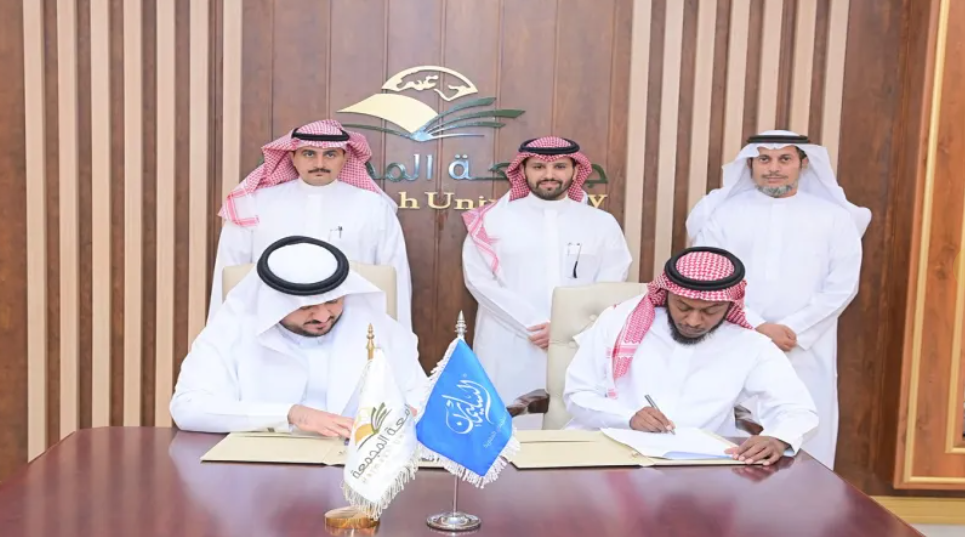
The Applied College has signed a memorandum of understanding (MoU) with two companies: El-faleh Sports House Company and Al-Sulaiman Real Estate Company. This MoU aims to exchange practical and academic experiences between the two sides.
Strategic partnerships, agreements, and MoU between educational institutions and various public and private sectors play effective role in supplying the labor market with national competencies and to saudaize a large segment of jobs. It also enhances the role of community partnership and constructive integration among the state institutions, which is a top priority of the Kingdom's Vision 2030 to improve human resources, citizen efficiency, and skills.
The MoU aims to achieve several goals, including providing training and consulting experiences to students to develop their knowledge and skills, qualifying college students in the best specialized institutions, providing job opportunities for graduate students and exchanging diverse experiences with private sectors.
The MoU was signed by Dr. Shadi Al-Shuwaier, the CEO of the Applied College at MU, and Mr. Mohammed Al-Atallah, the director of human resources at El-Faleh Sports House Company Al-Faleh, and Mr. Khaled bin Mutlaq, the director of human resources at Al-Sulaiman Real Estate Company.
In summary, Majmaah University as a whole actively participates in international collaborations that support the SDGs, ranging from UN-affiliated programs to partnerships with universities and industry. Through these efforts, MU reviews and benchmarks different approaches to sustainable development – whether by attending global forums, engaging in joint research, or visiting leading institutions – and develops international best practices by adapting what works best into its own operations. The university’s network of internal and external partnerships in research, education, and training underpins this process, enabling the exchange of expertise and resources needed to drive innovation. Moreover, MU’s commitment to involving students in international collaborations means that enhanced knowledge and skills flow back into the university, continually elevating its research quality and impact on the SDGs. These concerted actions demonstrate that Majmaah University is not only aligning with global sustainable development goals but also contributing to and learning from the world’s best practices in achieving them mu.edu.sa m.mu.edu.sa

شارك برأيك وساهم في تحسين خدماتنا.
أعجب 0 من 188 زائر بمحتوى الصفحة. (0% مؤشر رضا الزوار)