
Official government website affiliated with the government of the Kingdom of Saudi Arabia


Official Saudi government website links end with gov.sa
All official educational website links in the Kingdom of Saudi Arabia end with sch.sa or edu.sa

Government websites use HTTPS protocol for encryption and security.
Secure websites in the Kingdom of Saudi Arabia use HTTPS protocol for encryption.



SDG 17.2.1 Direct involvement in national government SDG policy development
 Posted in 2024-10-28
Updated 30/10/2025
17.2.1Majmaah University’s Involvement in National SDG Policy Development and Vision 2030 Alignment
Yes – Majmaah University, as an institution, has direct involvement in and input into national government Sustainable Development Goals (SDG) policy development. This involvement spans all stages of the policy cycle, including identifying challenges, developing strategies, modeling future scenarios, monitoring progress, and enabling adaptive management. The university has proactively aligned its own strategy, governance, and programs with the SDGs and Saudi Arabia’s Vision 2030 national agenda, and it collaborates closely with government bodies, international organizations, and NGOs to advance these goals. The following points summarize how Majmaah University contributes to SDG policy development and implementation:
-
Aligning University Strategy with SDGs:
Majmaah University has aligned its institutional strategy, internal policies, and governance to embrace and implement the SDGs. Under the directive of its leadership, the university established a Vision 2030 Realization Office and an interactive Kingdom Vision 2030 Platform to embed the national Vision 2030 (which is closely tied to the SDGs) into all aspects of university life mu.edu.sa mu.edu.sa. This platform disseminates information on Vision 2030 programs and initiatives – both the university’s own and national projects – via interactive kiosks across all 26 of the university’s departments mu.edu.sa mu.edu.sa. Through this office, Majmaah University actively proposes development initiatives aligned with Vision 2030, integrates and implements these initiatives across its departments, and monitors and continuously evaluates their outcomes using defined metrics in order to improve them mu.edu.sa. In other words, the university’s governance structure is geared toward identifying societal challenges and opportunities and then formulating and executing strategies to address them in line with national SDG priorities. It also documents successful practices and develops guidelines to inform future projects, exemplifying a cycle of adaptive management and learning mu.edu.sa mu.edu.sa. By formally embedding the SDGs and Vision 2030 into its strategy and daily operations, Majmaah University ensures that it contributes systematically to national sustainable development policy goals.
Kingdom Vision 2030 Platform
https://www.mu.edu.sa/ar/departments/the-vision-realization-office/180486
In line with the university’s policy of fully interacting with the Kingdom’s Vision 2030, and introducing it, its objectives, and the programs that serve it, His Excellency the University President, Dr. Khalid bin Saad Al-Muqrin, issued directives for the university to work on building an interactive system to spread the culture of the vision. Based on this directive, the Kingdom’s Vision 2030 Realization Office at the university, with the grateful support of the General Administration of Administrative and Financial Affairs, and in cooperation with the Project Management Office, the Deanship of Information Technology, the General Administration of Operation and Maintenance, and the General Administration of University Security, built this system and distributed interactive platforms in all university facilities. It is an interactive technical system that works to provide information, news, and media about the programs and initiatives of the Kingdom’s Vision 2030, whether carried out by the university or other entities in the Kingdom, and allows everyone to view this by browsing the electronic platforms distributed across the university’s departments, which number 26 platforms, which were taken into account to be in a prominent place in each of the university’s departments so that they are easy to access by university members and non-members.
The system consists of two parts:
Section One: A general section on all platforms, and it contains the following:
· Saudi Vision 2030 website.
· University Initiatives Department in the Kingdom's Vision 2030.
· Vision video gallery.
· Vision photo gallery.
· Gallery of articles on vision.
· News gallery for the latest developments in the vision.
Section Two: Specific to the entity where the platform is installed, allowing it to highlight its activity in the field of achieving the Kingdom’s Vision 2030, and it contains the following:
· Gallery of videos produced by the organization .
· Photo gallery of the entity .
· Gallery of articles about the region
· Region news gallery .
· This section also allows the entity to add any activities and advertisements it desires, even outside the field of view.
Vision Realization Office Objectives
- Supporting the National Transformation Plan to achieve Vision 2030.
- Working to employ the university’s equipment to develop the components of society.
- Contributing to the university’s role in supporting the national development plan.
- Working to make knowledge available to all seekers easily and conveniently.
- Reaching the largest possible number of learners with the least effort, time and cost.
- Contribute to determining the university’s priorities in accordance with the requirements of the National Transformation Program.
- Proposing development initiatives that contribute to achieving the Kingdom’s Vision 2030 inside and outside the university within its geographical scope.
- Working on implementing the development initiatives related to the vision, in integration with the university’s departments, and in accordance with its strategic vision.
- Monitoring the activities and programs of the Kingdom’s Vision 2030 implemented by the university in order to subject them to continuous evaluation according to specific standards with the aim of developing them.
- Documenting successful experiences and best practices in the field of the Kingdom’s Vision 2030 in order to benefit from them.
- Developing financial, administrative and regulatory guidelines to facilitate their use in the activities of the Kingdom’s Vision 2030.
- Building and activating technical systems that help the office manage the Kingdom’s Vision 2030 file, in cooperation with the relevant authorities at the university.
- Any other tasks assigned to the Observatory within its field of expertise.
Management of the Kingdom's Vision 2030 programs
This department is concerned with implementing and following up on the university’s programs related to the Kingdom’s Vision 2030. This department includes two units:
· Vision Initiatives Unit.
· Vision alignment unit.
Approved and implemented initiatives
- The first initiative: Digital Development Initiative:
Initiative description:
The initiative aims to empower and qualify citizens’ human capital to possess technical skills related to the following fields of knowledge: networks and the Internet, information security, technical applications, electronic crimes, electronic transactions, social communication, and technical innovations. This is done through non-traditional methods based on practical training and applied technical simulation.
To view the initiative, click here.
- The second initiative: Open Courses Initiative:
Initiative Description:
The university aims through this to adopt the concept of education linked to open source courses, which has emerged in the past few years worldwide as an effective tool for spreading science and knowledge to all segments of society who wish to develop themselves in all areas of interest, in support of formal education and the shift towards lifelong learning.
To view the initiative, click here.
-
Contributing to Policy Development & Implementation:
In practice, the university serves as a key player in national SDG policy implementation. Majmaah University not only works internally but also interfaces with government initiatives to shape and support policy. For example, it actively supports Saudi Arabia’s National Transformation Program and development plans as part of Vision 2030 mu.edu.sa. The Vision 2030 Office’s mandate includes identifying needs and proposing solutions (through development initiatives) and evaluating their impact, thereby feeding into policy refinement mu.edu.sa mu.edu.sa. This means the university is involved in pinpointing problems and designing interventions at a policy level. An illustration of this is the university’s program for building development initiatives and assessing their impact in light of the UN SDGs, which it conducted for the Riyadh Region’s Youth Council (a government-affiliated body). The success of this program led the Emirate of Riyadh (governorate) to issue a formal letter of thanks to the university for its role in training youth and evaluating intervention outcomes under the SDG framework mu.edu.sa. University officials highlighted that this initiative was part of “spreading the university’s strategy to promote positive concepts of the United Nations Sustainable Development Goals 2030 among the various societal components,” carried out in partnership with the Riyadh Emirate’s council mu.edu.sa. Such efforts show Majmaah University directly contributing to identifying local development challenges (youth development needs), devising and modeling intervention programs, and monitoring their impact for governmental stakeholders. Another example is the training program “Expert in the applications of the UN SDGs 2030” that Majmaah University delivered in coordination with the Ministry of Interior. This five-day program trained regional government leaders (deputy governors, department heads, etc.) on applying SDG concepts in development work mu.edu.sa mu.edu.sa. The program was initiated per the University President’s directive to “activate qualitative programs that serve the development directions of the state, in order to achieve the requirements of the Kingdom's Vision 2030”, and the Ministry of Interior’s strong participation affirmed the program’s relevance to national policy needs mu.edu.sa. Through such training and advisory programs for government officials, Majmaah University is directly involved in shaping policy implementation, building public sector capacity to plan and execute SDG-aligned interventions, and helping model likely futures (by equipping leaders with tools to project outcomes of SDG initiatives with or without certain interventions).
-
Collaboration with Government and NGOs for SDGs:
Majmaah University contributes to broader well-being and sustainable development research in collaboration with both government entities and non-governmental organizations. A hallmark of this collaboration is the university’s partnership with the United Nations Institute for Training and Research (UNITAR). In 2022, the President of Majmaah University signed a cooperation agreement with UNITAR to establish a CIFAL Center (Centre for Training of Authorities and Leaders) in Saudi Arabia mu.edu.sa mu.edu.sa. Through this agreement, the university and UNITAR work together on training, research, and advisory services aimed at advancing the UN Agenda 2030 and building capacity for sustainable development. The new Saudi CIFAL Center became part of UNITAR’s global network of training centers whose mission is to “strengthen the capacity of government officials and civil society leaders, enabling them to advance sustainable development” mu.edu.sa. This means Majmaah University is a hub for empowering both government and NGO/civil society stakeholders with knowledge and skills to achieve SDGs. The university’s leadership noted that this partnership with the UN is a testament to Majmaah’s commitment to the UN 2030 Agenda and to building national capacities for sustainable development mu.edu.sa. In addition to international collaborations, Majmaah University works closely with domestic government bodies. As mentioned, it partners with regional authorities (like the Riyadh Region Emirate) and national ministries (Interior, Education, etc.) to run joint initiatives. It has also signed agreements with organizations in the non-profit sector; for instance, the university has cooperated with local associations and councils on community development projects (e.g. programs on social responsibility, healthcare initiatives via student volunteer programs, etc., as documented in its SDG partnership reports). These collaborations indicate that the university, as a body, provides expertise and input to multi-sector efforts tackling the SDGs – whether through policy advisory, research, or direct program implementation – in concert with government and NGOs.
For implementing the Initiatives Building Program in light of the United Nations Sustainable Development Goals 2030, the university receives a letter of thanks from the Emirate of Riyadh Region.
The University received a letter of appreciation from the Emirate of Riyadh Region for implementing the program for building development initiatives and evaluating their impact in light of the United Nations Sustainable Development Goals 2030. The program was implemented over two periods, starting from May 18-19, 2022, and the second period from May 23-25, 2022, for the Riyadh Region Youth Council.
On this occasion, His Excellency the University Vice-Rector, Prof. Dr. Musallam bin Mohammed Al-Dosari, stated that this program comes within the framework of the directives of His Excellency the University President, Prof. Dr. Saleh bin Abdullah Al-Mizal, to disseminate the university’s strategy to promote positive concepts of the United Nations Sustainable Development Goals 2030 among the various components of society. It has been implemented for the entities affiliated with the Riyadh Region Emirate Council, based on the existing partnership between the university and the Emirate. His Excellency extended his thanks to the Emirate of the region for its confidence in the university’s programs, to the university team, to the regional council for its cooperation, and to the program team for their distinguished efforts.
During his meeting with the Kingdom's representative to the United Nations in Geneva, the President of Majmaah University signed a services agreement with the United Nations Institute for Training and Research - Majmaah University.
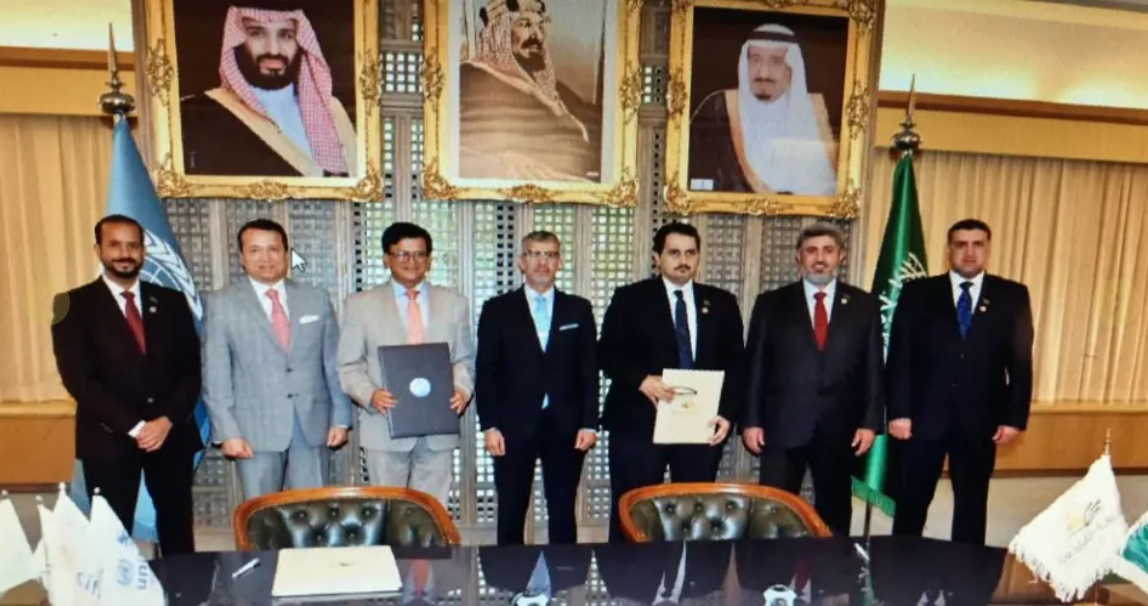
His Excellency the Permanent Representative of the Kingdom of Saudi Arabia to the United Nations in Geneva, Ambassador Dr. Abdulaziz bin Mohammed Al-Wasil, received in his office a delegation from Majmaah University headed by His Excellency the President of the University, Professor Dr. Saleh bin Abdullah Al-Mizal, and the delegation participating from the university. During the meeting, the university’s efforts and areas of cooperation with the United Nations were reviewed, reflecting the Kingdom’s international efforts and its interaction with the international community.
During the meeting, Ambassador Dr. Al-Wasil commended the university's significant efforts, particularly in highlighting the Kingdom's efforts and the significant strides it has made in implementing the 2030 Sustainable Development Goals.
During the meeting, a training, research and advisory services agreement was signed with the United Nations Institute for Training and Research (UNITAR) in Geneva, to enhance cooperation in areas of common interest in training, development and research, and to promote joint action to achieve the United Nations Sustainable Development Goals.
The agreement was signed by the President of Majmaah University, Prof. Dr. Saleh bin Abdullah Al-Muzal, and the Assistant Secretary-General of the United Nations and Executive Director of the United Nations Institute for Training and Research (UNITAR), Mr. Nikhil Seth, in the presence of His Excellency the Permanent Representative of the Kingdom of Saudi Arabia to the United Nations in Geneva, Dr. Ambassador Dr. Abdulaziz Al-Wasil, and the University Vice-Rector, Prof. Dr. Musallam bin Muhammad Al-Dosari, the University President’s Advisor, Dr. Abdulaziz Al-Rashoud, and Dr. Ayman Jamil Al-Barakati.
The agreement aims to establish the Cefal Center in the Kingdom of Saudi Arabia. The center will represent the United Nations Institute for Training and Research (UNITAR) from its headquarters in the Kingdom, and will contribute to the advancement of the United Nations 2030 Agenda. The center will also specialize in supporting sustainable development.
The Cefal Center in Saudi Arabia joins the twenty-four centers in the global Cefal network, whose mission is to enhance the capacities of government officials and civil society leaders, enabling them to advance sustainable development.
The network comprises international training centers for organizations and leaders across Asia, Oceania, Africa, Europe, the Americas, and the Caribbean. These centers provide innovative learning solutions for individuals, organizations, and institutions to enhance global decision-making and support national action to shape a better future.
Mr. Seth, Executive Director of the United Nations Institute for Training and Research, explained that the service agreement with the university will develop joint work to support the implementation of the Institute's strategy, implement various capacity-building activities in the areas of cybersecurity and youth empowerment, enhance joint work to achieve the United Nations goals and other activities related to sustainable development, and develop human capital.
For his part, His Excellency the President of Majmaah University expressed the university’s pride in signing this agreement with the United Nations Institute for Training and Research, considering it a culmination of joint work, and an affirmation of Majmaah University’s commitment to supporting the United Nations Global Strategy to achieve its 2030 Sustainable Development Goals, and supporting and building national capacities to play a major and important role in the wheel of development, progress and prosperity that the Kingdom of Saudi Arabia is experiencing under the leadership of the Custodian of the Two Holy Mosques, King Salman bin Abdulaziz Al Saud, and His Royal Highness the Crown Prince, Prince Mohammed bin Salman bin Abdulaziz Al Saud - may God protect them.
-
Alignment with Government’s Vision 2030:
Majmaah University’s activities are closely aligned with Saudi Arabia’s Vision 2030, which is the national blueprint for development and is harmonized with the SDGs. The creation of the Vision 2030 Realization Office at the university is a direct response to this national policy framework mu.edu.sa. The office’s objectives explicitly include “supporting the National Transformation Plan to achieve Vision 2030” and “contributing to the university’s role in supporting the national development plan” mu.edu.sa. In practical terms, this means the university reviews its academic and operational programs to ensure they advance Vision 2030 targets in education, research, and community service. Many of the university’s initiatives (from digital skill development programs to open educational resources) are launched in support of Vision 2030 goals and the SDGs mu.edu.sa mu.edu.sa. Furthermore, when entering into external partnerships or launching new projects, Majmaah University often frames them in context of Vision 2030. For example, a cooperation agreement with the Chamber of Commerce and Industry in Zulfi was undertaken “to achieve development and the Kingdom’s Vision 2030 through cooperation and integration of the Kingdom’s institutions in preparing and qualifying human resources” mu.edu.sa. This agreement focuses on jointly training young Saudis, conducting economic and labor market studies, and organizing workshops in areas of societal need – all aligned with national development strategies mu.edu.sa mu.edu.sa. By aligning so closely with Vision 2030, the university ensures its inputs are directly relevant to government policy development. University officials have highlighted that Majmaah opens “new and wide horizons of cooperation with all governmental and private sectors” and “seeks integration and partnership with all sectors to achieve… the most important goals of the university, which is to provide distinguished services to the community”, in line with national aspirations mu.edu.sa. In summary, Majmaah University acts as an arm of Vision 2030 execution in the higher-education sector, translating government policy objectives into actionable programs and contributing expertise to national policy reviews.
The university signs a cooperation agreement with the Zulfi Chamber of Commerce and Industry.
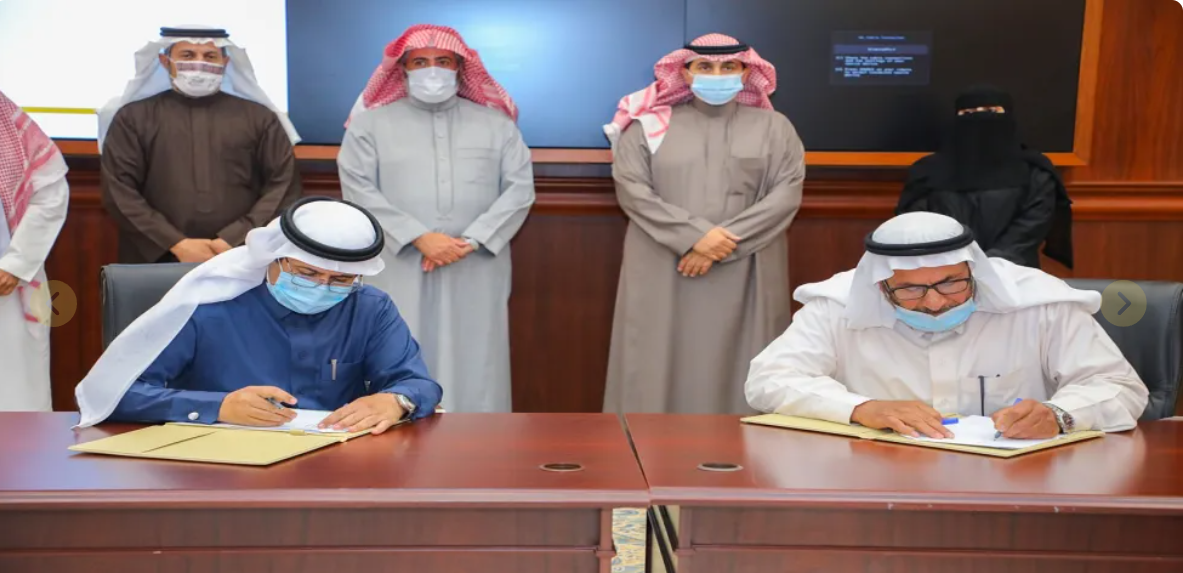
The university, represented by the University Agency for Postgraduate Studies and Scientific Research, signed a cooperation agreement with the Chamber of Commerce and Industry in Zulfi. The university was represented in signing this agreement by the Vice-Rector for Postgraduate Studies and Scientific Research, Professor Dr. Ahmed bin Ali Al-Rumaih, and on behalf of the Chamber of Commerce and Industry in Zulfi, His Excellency the Chairman of the Board of Directors, Mr. Ibrahim bin Atallah Al-Atallah.
This agreement comes from the university’s keenness to activate effective cooperation methods to achieve development and the Kingdom’s Vision 2030 through the cooperation and integration of the Kingdom’s institutions in preparing and qualifying human resources, and in light of the university’s possession of scientific cadres with a distinguished educational and cognitive level, and from diverse cultures and scientific schools, and based on the keenness and endeavor of the Chamber of Commerce and Industry in Zulfi to support Saudi young men and women and train and qualify them for the labor market through the Chamber’s training center and exploiting the available capabilities.
The agreement aims to enhance joint cooperation between the two parties to achieve integration, and unify efforts through the cooperation and integration of the Kingdom’s institutions in preparing and qualifying human resources capable of achieving development and the Kingdom’s Vision 2030, and achieving mutual benefits, through organizing and holding training activities (courses, seminars, workshops) in organizational, administrative, economic, accounting, financial aspects, and areas needed by society, and qualifying young people according to the specialization of each party, and utilizing faculty members to provide their expertise to some committees and work teams formed in the Chamber, planning training and development programs, preparing economic studies and feasibility studies for investment opportunities and studies of the Saudi labor market upon request, in addition to providing the opportunity for male and female graduates to apply practically in the Chamber of Commerce according to a letter agreed upon by both parties on the required number.
-
Strategic Partnerships and Agreements:
The university has entered multiple strategic partnerships that strengthen its role in national SDG efforts. These agreements span government agencies, international organizations, and the private sector, forming a network of collaboration for sustainable development. A standout partnership is with UNITAR, as noted above, which not only enhances global cooperation but also firmly places the university in a national leadership role for SDG training and policy support mu.edu.sa mu.edu.sa. Majmaah University’s President described the UNITAR agreement as “the culmination of joint work” and an affirmation of the university’s commitment to the UN’s sustainable development strategy and to national development under Saudi leadership mu.edu.sa. On the national front, Majmaah University has formal agreements with various ministries and public-sector bodies. For instance, the university signed a cooperation agreement with Public Security (Ministry of Interior) to provide training programs that enhance the performance of security sector personnel mu.edu.sa. The President of the University highlighted that through its Community Service Deanship, Majmaah seeks partnership with all sectors to meet community and national needs, and the Public Security agreement is evidence of the university “moving according to the plans and hopes drawn [by the leadership]” in national development mu.edu.sa. The university also forges partnerships in the educational and research sectors internationally. It has cooperative agreements with distinguished global universities and participates in international forums (such as the High-Level Political Forum’s Higher Education for Sustainability initiative) to share best practices and shape policies beyond its campus mu.edu.sa mu.edu.sa. These partnerships allow Majmaah to contribute research and expertise toward national policy – for example, collaborating on studies, hosting joint conferences on sustainability, and consulting on policy models. Additionally, Majmaah University works with private sector and NGO partners to tackle SDG themes. It has signed numerous Memoranda of Understanding with companies and non-profits to support community development, student training, and research. One example is a series of MoUs with local industries to train and employ graduates, which not only addresses SDG 8 (decent work and economic growth) but also supports the Human Capacity Development Program under Vision 2030 mu.edu.sa mu.edu.sa. By building these strategic partnerships, the university amplifies its impact on policy: each agreement creates a conduit for translating academic knowledge into practical solutions and for feeding back insights from practice into policy formulation.
During his meeting with the Kingdom's representative to the United Nations in Geneva, the President of Majmaah University signed a services agreement with the United Nations Institute for Training and Research - Majmaah University.
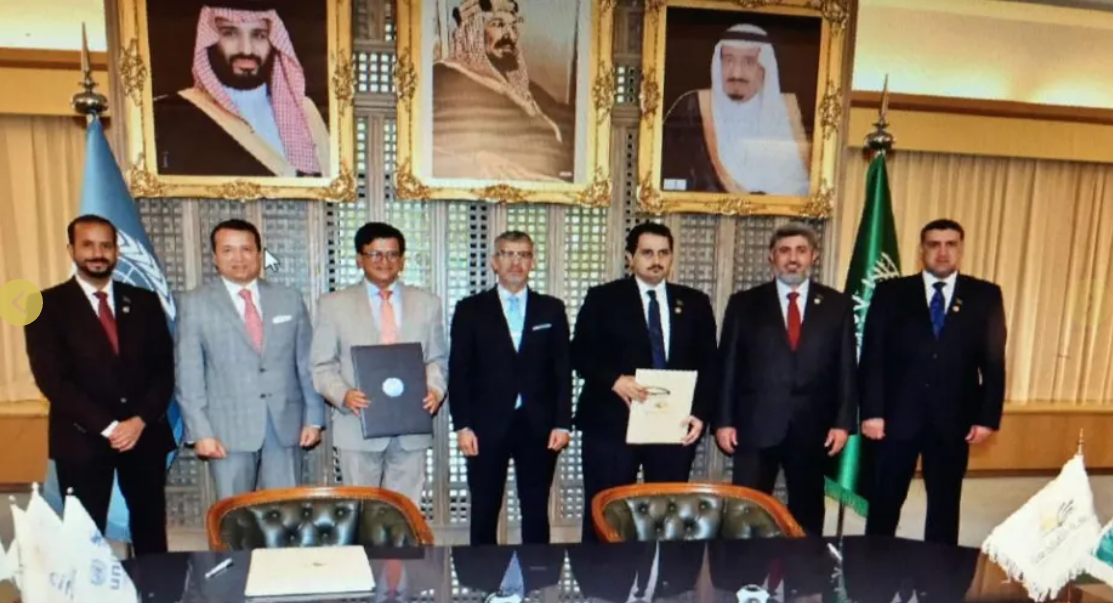
His Excellency the Permanent Representative of the Kingdom of Saudi Arabia to the United Nations in Geneva, Ambassador Dr. Abdulaziz bin Mohammed Al-Wasil, received in his office a delegation from Majmaah University headed by His Excellency the President of the University, Professor Dr. Saleh bin Abdullah Al-Mizal, and the delegation participating from the university. During the meeting, the university’s efforts and areas of cooperation with the United Nations were reviewed, reflecting the Kingdom’s international efforts and its interaction with the international community.
During the meeting, Ambassador Dr. Al-Wasil commended the university's significant efforts, particularly in highlighting the Kingdom's efforts and the significant strides it has made in implementing the 2030 Sustainable Development Goals.
During the meeting, a training, research and advisory services agreement was signed with the United Nations Institute for Training and Research (UNITAR) in Geneva, to enhance cooperation in areas of common interest in training, development and research, and to promote joint action to achieve the United Nations Sustainable Development Goals.
The agreement was signed by the President of Majmaah University, Prof. Dr. Saleh bin Abdullah Al-Muzal, and the Assistant Secretary-General of the United Nations and Executive Director of the United Nations Institute for Training and Research (UNITAR), Mr. Nikhil Seth, in the presence of His Excellency the Permanent Representative of the Kingdom of Saudi Arabia to the United Nations in Geneva, Dr. Ambassador Dr. Abdulaziz Al-Wasil, and the University Vice-Rector, Prof. Dr. Musallam bin Muhammad Al-Dosari, the University President’s Advisor, Dr. Abdulaziz Al-Rashoud, and Dr. Ayman Jamil Al-Barakati.
The agreement aims to establish the Cefal Center in the Kingdom of Saudi Arabia. The center will represent the United Nations Institute for Training and Research (UNITAR) from its headquarters in the Kingdom, and will contribute to the advancement of the United Nations 2030 Agenda. The center will also specialize in supporting sustainable development.
The Cefal Center in Saudi Arabia joins the twenty-four centers in the global Cefal network, whose mission is to enhance the capacities of government officials and civil society leaders, enabling them to advance sustainable development.
The network comprises international training centers for organizations and leaders across Asia, Oceania, Africa, Europe, the Americas, and the Caribbean. These centers provide innovative learning solutions for individuals, organizations, and institutions to enhance global decision-making and support national action to shape a better future.
Mr. Seth, Executive Director of the United Nations Institute for Training and Research, explained that the service agreement with the university will develop joint work to support the implementation of the Institute's strategy, implement various capacity-building activities in the areas of cybersecurity and youth empowerment, enhance joint work to achieve the United Nations goals and other activities related to sustainable development, and develop human capital.
For his part, His Excellency the President of Majmaah University expressed the university’s pride in signing this agreement with the United Nations Institute for Training and Research, considering it a culmination of joint work, and an affirmation of Majmaah University’s commitment to supporting the United Nations Global Strategy to achieve its 2030 Sustainable Development Goals, and supporting and building national capacities to play a major and important role in the wheel of development, progress and prosperity that the Kingdom of Saudi Arabia is experiencing under the leadership of the Custodian of the Two Holy Mosques, King Salman bin Abdulaziz Al Saud, and His Royal Highness the Crown Prince, Prince Mohammed bin Salman bin Abdulaziz Al Saud - may God protect them.
The University and Public Security sign a cooperation agreement.
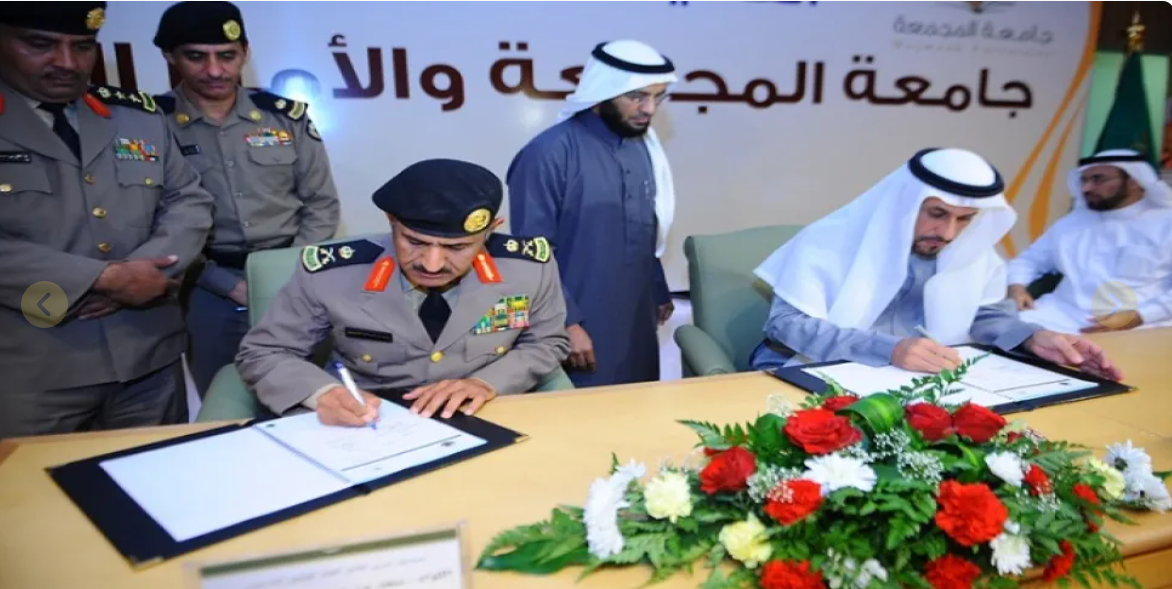
On Sunday, 16/1/1433 AH, a cooperation agreement was signed at the university between the university and the Public Security. The agreement was signed on behalf of the university by His Excellency the University President, Dr. Khalid bin Saad Al-Muqrin, and on behalf of the Public Security by His Excellency Major General Saad bin Abdullah Al-Khulaiwi, Assistant Director of Public Security for Training Affairs. The signing ceremony began with a speech by His Excellency the Deputy Dean of Community Service and Continuing Education, Dr. Hamad bin Abdullah Al-Qamizi, who thanked His Excellency Major General Saad Al-Khulaiwi for his presence and the accompanying delegation, as well as the security leaders working in Public Security in the governorates that fall within the university’s service area. This was accompanied by a visual presentation about Majmaah University and its training capabilities, and the importance of the agreement, which comes within the framework of the university’s provision of its expertise and training services, through offering training programs to develop the performance of public security personnel. He extended his thanks to His Excellency the University President for his continuous follow-up and constant keenness to make the Deanship of Community Service at the university one of the distinguished deanships at the level of Saudi universities. He also thanked the Director of Public Security Scholarships, Colonel Dr. Ali Al-Muhaimid, and the Dean of Community Service and Continuing Education, Dr. Omar bin Musaed Al-Shariwi, who followed up on the agreement from the beginning until it was finally implemented.
Then, His Excellency the University President, Dr. Khalid bin Saad Al-Muqrin, spoke and welcomed the university guests. He explained that Majmaah University, through the Deanship of Community Service and Continuing Education, is opening new and broad horizons of cooperation with all governmental and private sectors, and that it seeks to integrate and achieve partnership with all sectors to achieve one of the most important goals of the university, which is to provide distinguished services to the community with a positive impact. He added that the presence of this elite group of public security personnel at the university to sign this agreement is evidence that the university is proceeding according to the plans and hopes drawn up for it by the rulers, may God protect them, headed by the Custodian of the Two Holy Mosques, King Abdullah bin Abdulaziz, and his loyal Crown Prince, Minister of Interior, Prince Nayef bin Abdulaziz, who pay great attention to universities.
Then, His Excellency Major General Saad Al-Khulaiwi, Assistant Director of Public Security, spoke about the importance of the partnership with the university as a leading scientific entity in the Kingdom. His Excellency thanked all the employees of Al-Majmaah University, headed by His Excellency the University President, for the warm hospitality and for the great cooperation he received from His Excellency the Dean of Community Service and Continuing Education, Dr. Omar Al-Sharifi, and its Deputy, His Excellency Dr. Hamad bin Abdullah Al-Qamizi. He also praised the deanship’s sincere desire to sign this agreement, which serves the public interest and fulfills the Public Security’s desire to obtain training programs to qualify its employees in various fields.
An agreement was then signed, aiming to build bridges of cooperation between Majmaah University and the Public Security Department. The university will provide high-quality training programs delivered by qualified and experienced trainers to Public Security personnel.
The signing ceremony was attended by university vice presidents, deans of colleges, supporting deanships, and a number of security leaders. At the conclusion, the Assistant Director of Public Security, his accompanying delegation, and security leaders were honored. Public Security also honored the university president, the dean of community service and continuing education, and their deputies.
The university participates in the Higher Education for Sustainability Forum as part of the High-Level Political Forum.
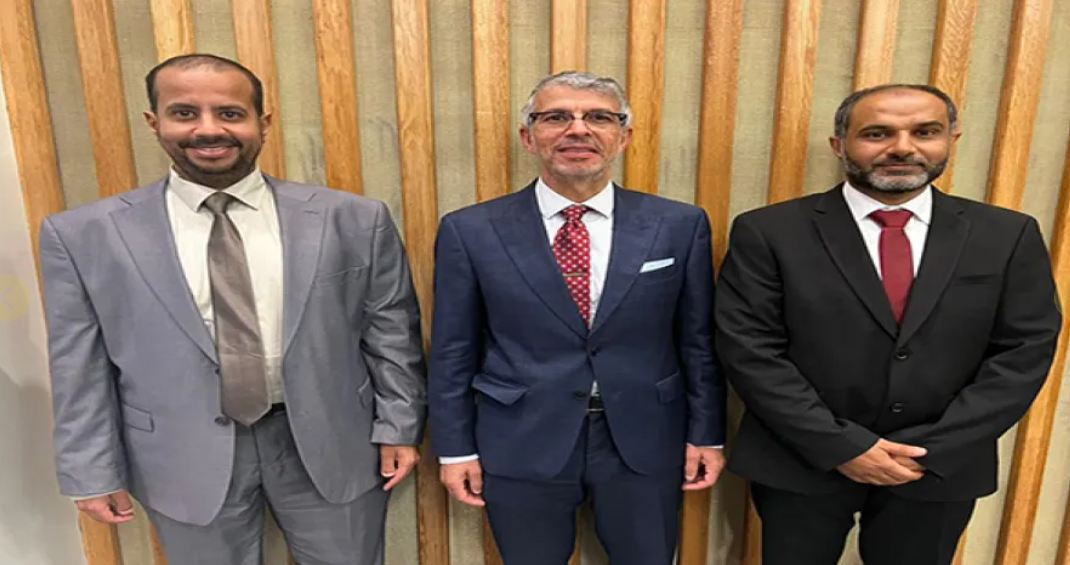
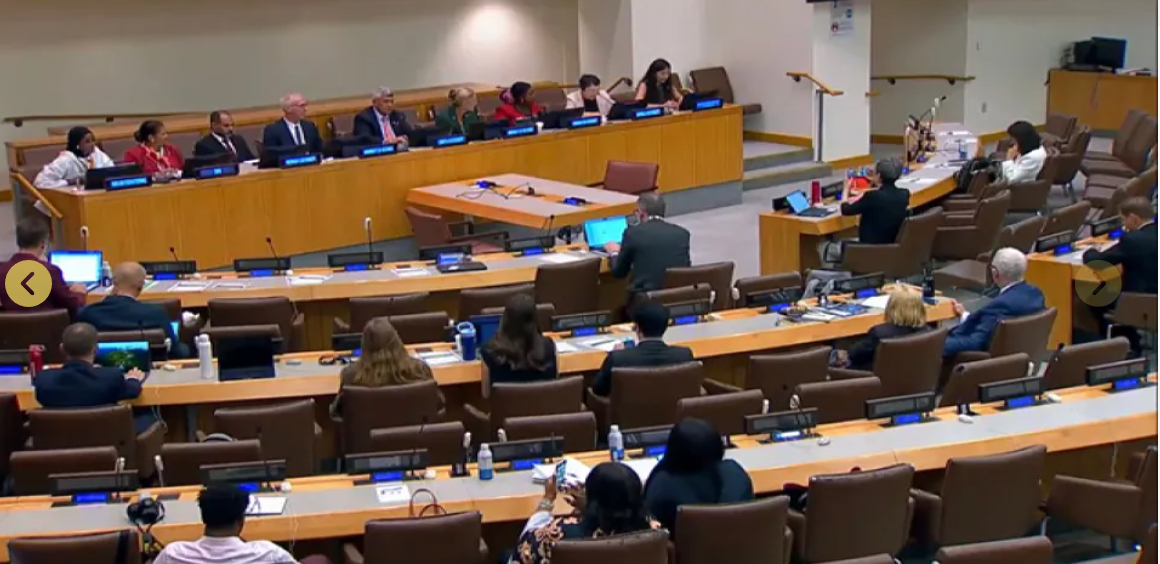
Under the supervision and guidance of His Excellency the University President - Chairman of the Board of Directors of the Saudi Center for Sustainable Development, Prof. Saleh bin Abdullah Al-Mazal - the University participated in the Higher Education for Sustainability Forum (HESI) 2024, which was held as a special event within the High-Level Political Forum (HLPF) to follow up and review the 2030 Agenda for Sustainable Development.
The event was attended by His Excellency the Permanent Representative of the Kingdom of Saudi Arabia to the United Nations, Ambassador Dr. Abdulaziz Al-Wasil, and high-level representatives from international organizations and governments. The university was represented as a speaker by the Vice-Rector for Postgraduate Studies and Scientific Research, Professor Dr. Muhammad bin Abdulrahman Al-Shahri.
The event focused on “The Future of Higher Education for Sustainable Development.” The forum also included multi-stakeholder discussions on the intersection of education, innovation, and sustainability, with a focus on the impact of artificial intelligence and other emerging technologies amid challenges related to stalled progress towards achieving the Sustainable Development Goals (SDGs).
The event highlighted inspiring initiatives from the UN system, HESI working groups, and others. The forum also served as a preparatory platform for future initiatives to be promoted or launched at the Future Summit 2024. The forum's recommendations and strategies will shape policies and practices, influencing action plans for achieving sustainable development in higher education.
During the forum, the importance of transforming higher education institutions to keep pace with dynamic global changes and an unpredictable future was recognized, while valuing local knowledge and partnerships, exploiting global opportunities for innovation, and promoting sustainable and equitable development worldwide. Areas through which higher education institutions can enhance the achievement of the Sustainable Development Goals through inclusive emerging technologies, including artificial intelligence, while managing related social changes were identified. The membership network was also expanded through the active participation of diverse HESI working groups.
For his part, Professor Mohammed bin Abdulrahman Al-Shehri affirmed the support and guidance of His Excellency the University President - and Chairman of the Board of Directors of the Saudi Center for Sustainable Development - in enhancing the University's role in such global events, which enhances the University's standing and contributes to achieving sustainable development goals at the local and international levels.
Represented by the Employment Services and Alumni Affairs Center: The university signs cooperation agreements with a number of entities.
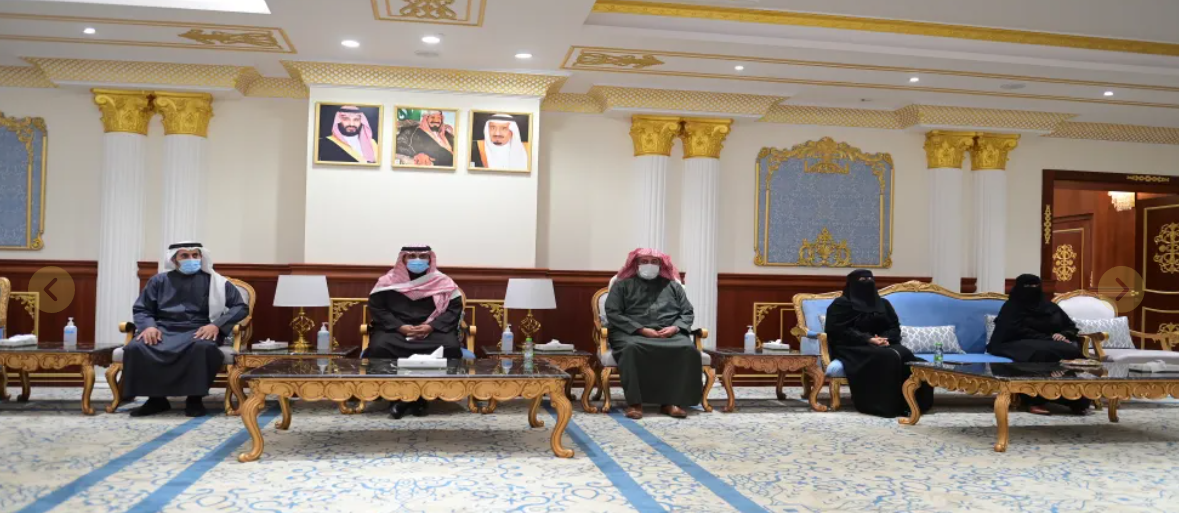
The university, represented by the Career Services and Graduate Affairs Center, affiliated with the University Agency for Educational Affairs, signed cooperation agreements with a number of private sector entities, to prepare university graduates for the labor market and provide them with job opportunities. The agreement was signed during a ceremony held on this occasion in the presence of His Excellency the University President, Professor Dr. Saleh bin Abdullah Al-Muzal, the University Vice President for Educational Affairs, Dr. Mohammed bin Saleh Al-Aboudi, a number of university staff, and representatives of the entities participating in these agreements.
The ceremony began with a speech by Dr. Saleh Amlih bin Mayouf, Supervisor of the Employment Services and Alumni Affairs Center, in which he welcomed the attendees. He stated that the Employment Services and Alumni Affairs Center has been striving since its establishment to build partnerships with governmental and private sectors in the local community affiliated with the university branches to contribute to the training and qualification of graduates for the labor market. He explained that the center, in cooperation with partners, has contributed to the employment of more than 112 male and female graduates, and the training of more than 40 male and female graduates on on-the-job training programs (Tamheer) in cooperation with Coca-Cola and Sudair Pharma. Three training programs were also held. He indicated that these partnerships that are being signed during this ceremony come to open good horizons of cooperation with partners and contribute to reducing the time to obtain employment and training for male and female graduates, as well as identifying the needs of partners and helping them choose the employee most suitable for their needs.
He added that the center has worked in cooperation with the relevant colleges to provide training courses that qualify for obtaining professional and vocational certificates required for the labor market. He indicated in this context that the center is working to launch more than twenty qualification programs to obtain professional certificates in the field of management, finance, accounting, security and safety, information technology, construction quality, and engineering certificates. He added that the center, in line with the directions of His Highness the Crown Prince’s Program for Human Capacity Development, has launched a number of initiatives, including the “Towards a Distinguished Career Future” initiative, which aims to raise the awareness of new and current students of the variables of the labor market and the need to build a CV from the first year of university, in addition to launching the Al-Majmaah University Alumni Association and a membership card to build a bridge of communication with graduates and a continuous and permanent relationship between graduates and the university.
After that, cooperation agreements were signed with the participating parties. The university was represented in the signing by the Vice-Rector for Academic Affairs, Prof. Dr. Mohammed bin Saleh Al-Aboudi. The agreements were signed with each of: Baja Food Industries Company, Sak International Factory for Control Systems and Military Technology, Siyab Plastic Factory, Gulf Integrated Industry Company, and Shawermer Innovative Foods Company.
-
Role as a Success Partner in the Education Sector:
Majmaah University’s leadership in SDG initiatives has positioned it as a “success partner” within the higher education sector, both nationally and regionally. The university not only implements SDG-aligned programs on its own campus, but also collaborates with and influences other educational institutions to advance sustainable development. A clear indication of this role is the recognition of one of Majmaah University’s SDG capacity-building programs by educational leaders across the Gulf region. A sustainability training initiative launched by Majmaah (through its Social Responsibility Observatory) in 2018 was “praised by the presidents of universities and higher education institutions in the Gulf Cooperation Council (GCC) countries”. In fact, the GCC Committee of University Presidents formally recommended that other universities in the region adopt and benefit from Majmaah’s initiative as a model for integrating global goals in higher education mu.edu.sa. This endorsement underscores how Majmaah University serves as a mentor and partner to peer institutions in incorporating SDG strategies, essentially contributing to policy development in the educational sector at large. Domestically, Majmaah University’s commitment to quality and sustainability in education has earned it accolades, such as the Excellence and Leadership Award in the educational institutions category (for a Vision 2030-related performance project) from the Ministry of Human Resources and Social Development mu.edu.sa. The university also recently won the King Abdulaziz Quality Award (Bronze) in the government higher education category, reflecting its institutional excellence in governance and its alignment with national development objectives mu.edu.sa mu.edu.sa. These successes enhance the university’s credibility as a key partner to the Ministry of Education and other educational bodies in policy dialogues. Moreover, Majmaah’s continuous outreach – such as offering open-source courses and community education programs – contributes to national education and lifelong learning goals, reinforcing its status as a successful collaborator in the education sector. University leadership explicitly emphasizes opening channels of cooperation “with all governmental and private sectors” to achieve the university’s mission of community service mu.edu.sa, which includes educational outreach. In summary, Majmaah University’s achievements and collaborative approach have made it a model and partner for educational institutions aiming to support the SDGs, thereby indirectly shaping educational policies and strategies on a broader scale.
Saudi Arabia's Cefal Center highlights its commitment to sustainability and strengthens its international partnerships at the Qatar Social Responsibility Conference 2024.
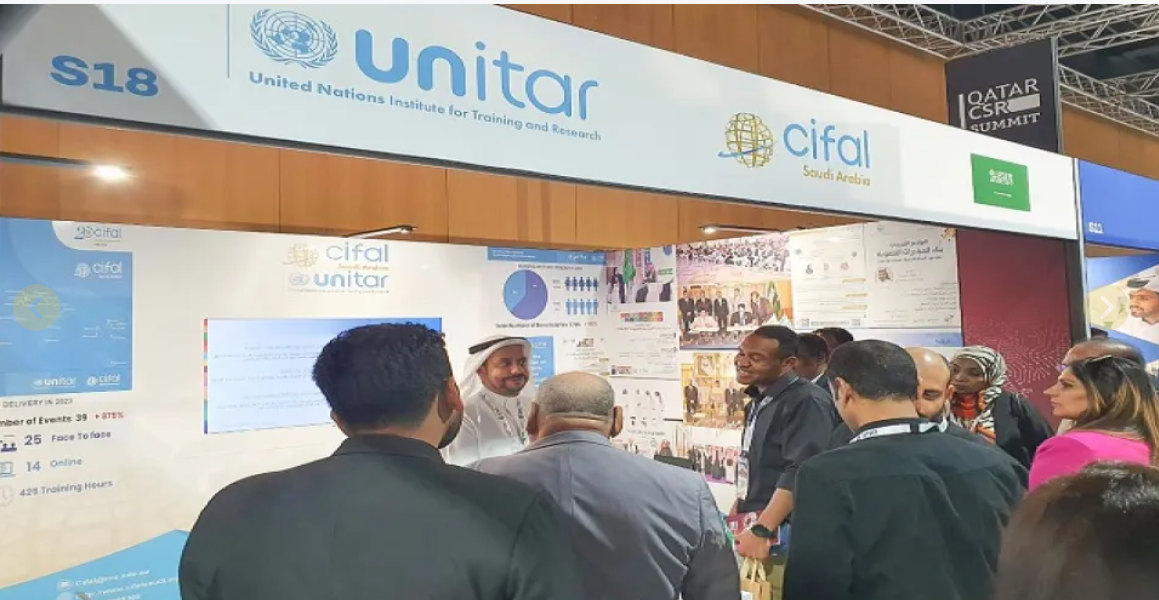
In confirmation of its unwavering commitment to supporting sustainability and achieving the United Nations Sustainable Development Goals, the Seaval Center actively participated in the second edition of the Qatar Social Responsibility Conference and Exhibition, held from April 30 to May 2, 2024, at the Qatar National Convention Center.
This conference is part of the National Social Responsibility Program and represents an international platform that brings together specialists, industry leaders, and academics to promote sustainable development and highlight Saudi Arabia's ongoing efforts in this field.
Commenting on the participation, Dr. Ayman bin Jameel Al-Barakati, Director of the Cefal Center, praised the continuous support the Center receives from His Excellency the University President, Professor Saleh bin Abdullah Al-Mazal, and the University Vice President for Development and Investment, Professor Muslim bin Mohammed Al-Dosari. He emphasized that the great support we receive at the Center from the University leadership reflects the deep interest in building capacities and enhancing skills in the field of social responsibility, sustainability, and achieving the global goals and the 2030 Agenda, which enables the Center to participate effectively in international forums such as this conference.
During the conference, the Cefal Center showcased its diverse initiatives and capabilities aimed at integrating economic, social, and environmental objectives into corporate operations, reflecting the center's commitment to sustainable development goals. The conference was well attended, with significant interest shown in the Cefal Center's pavilion.
On the sidelines of the conference, constructive meetings were held with Dr. Saif bin Ali Al-Hajri, CEO of the Qatar National Social Responsibility Program, and Dr. Badr Al-Ismail, Chairman of the Social Responsibility Committee at Qatar University. These meetings discussed ways to collaborate to enhance social responsibility and sustainability practices.
In addition, meetings were held with representatives from the International Labour Organization, UNESCO's Partnerships Departments, and a number of companies and other international organizations to discuss opportunities for cooperation and partnership.
It's worth noting that these meetings represent an important step toward expanding the Cefal Center's network of international partnerships and strengthening its role as a key player in the field of social responsibility and sustainability worldwide.
The university achieved first place in the 2023 Periodic Measurement of Job Engagement Project.
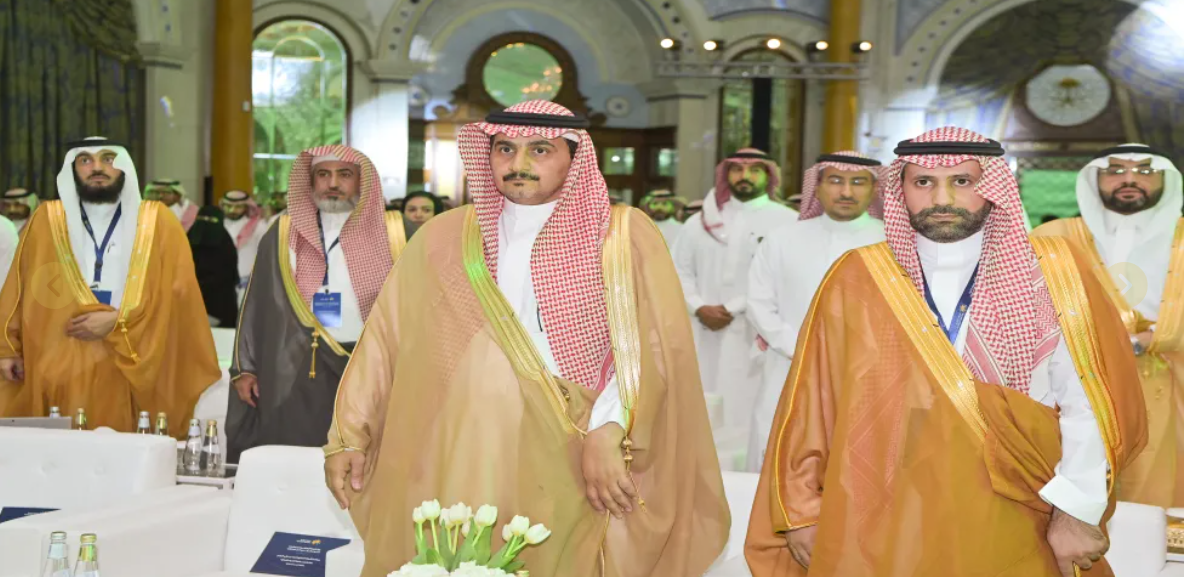
The university received the Excellence and Leadership Award in the Educational Institutions category, achieving first place in the 2023 Periodic Measurement of Employee Engagement Project, which is one of the projects of the Kingdom’s Vision 2030, linked to the third level of the vision’s objectives (improving the productivity of government sector employees). The Ministry of Human Resources and Social Development honored the university on the occasion of this achievement, based on the project’s results and the sustainable employee engagement criterion.
The Director General of Human Resources, Mr. Sulaiman bin Badr Al-Badr, explained that the university’s achievement of first place comes as a result of joint work and cooperation between the various departments at the university, and in light of the interest and follow-up by the President of the University, Professor Dr. Saleh bin Abdullah Al-Mazal. He stressed that the university is keen to invest in human competencies and harness their role in achieving the project of periodic measurement of job engagement, and achieving the third strategic plan of the university, extending his thanks to all university employees for their efforts in achieving this accomplishment.
The university won the King Abdulaziz Quality Award in its fourth session in the public higher education category.
The university won the King Abdulaziz Quality Award in its fourth session in the category of government higher education at the bronze level in the category of ministries affiliated with it. This award aims to achieve institutional excellence in national governmental, private and non-profit institutions, in line with the most important objectives of the Kingdom’s Vision 2030, which aims to achieve excellence in government services and enhance the role of the non-profit sector in sustainable development. This matter prompted institutions to express their desire to apply for the award, as it reached more than 300 institutions, an increase of more than 200% over the previous session. Of these, 134 institutions completed the requirements of desk evaluation, while 40 institutions reached the final evaluation stage, and 26 institutions won the award. In this regard, His Excellency the University President, Dr. Khalid bin Saad Al-Muqrin, stated that this award is of great importance to us, as it reflects the extent of the university’s quality and provides realistic indicators and indications of the volume of work, given that the award is keen to govern the evaluation and arbitration processes to ensure neutrality and fairness in the evaluation, as the evaluation stages include individual desk evaluation, then group desk evaluation, in addition to field visits, and then the arbitration of the evaluation reports by the arbitration committee to ensure fairness in the evaluation. His Excellency added that this achievement comes as a natural result of the support the university receives from the government of the Custodian of the Two Holy Mosques, King Salman bin Abdulaziz, and his faithful Crown Prince, Deputy Prime Minister and Minister of Defense, His Royal Highness Prince Mohammed bin Salman - may God protect them - and the capabilities and equipment provided to it that have effectively contributed to the advancement of its work and the achievement of many distinguished accomplishments at the national and international levels. Perhaps the university’s recent obtaining of institutional academic accreditation after it met all the standards and requirements and fulfilled all the quality conditions contributed greatly to the successive achievements in terms of quality, and we are undoubtedly happy with such These achievements represent a true assessment of the university's academic and administrative performance, which is one of the university's strategic goals that it has sought to achieve and succeeded in doing so - thanks to God - and then through the efforts of the university's staff, including vice presidents, deans, professors, employees, and male and female students. His Excellency considered these achievements to be the result of their hard work and dedication.
The University and Public Security sign a cooperation agreement.
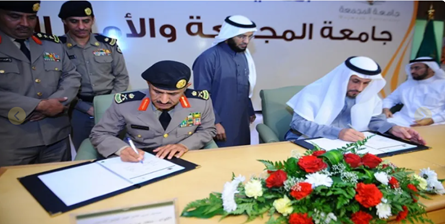
On Sunday, 16/1/1433 AH, a cooperation agreement was signed at the university between the university and the Public Security. The agreement was signed on behalf of the university by His Excellency the University President, Dr. Khalid bin Saad Al-Muqrin, and on behalf of the Public Security by His Excellency Major General Saad bin Abdullah Al-Khulaiwi, Assistant Director of Public Security for Training Affairs. The signing ceremony began with a speech by His Excellency the Deputy Dean of Community Service and Continuing Education, Dr. Hamad bin Abdullah Al-Qamizi, who thanked His Excellency Major General Saad Al-Khulaiwi for his presence and the accompanying delegation, as well as the security leaders working in Public Security in the governorates that fall within the university’s service area. This was accompanied by a visual presentation about Majmaah University and its training capabilities, and the importance of the agreement, which comes within the framework of the university’s provision of its expertise and training services, through offering training programs to develop the performance of public security personnel. He extended his thanks to His Excellency the University President for his continuous follow-up and constant keenness to make the Deanship of Community Service at the university one of the distinguished deanships at the level of Saudi universities. He also thanked the Director of Public Security Scholarships, Colonel Dr. Ali Al-Muhaimid, and the Dean of Community Service and Continuing Education, Dr. Omar bin Musaed Al-Shariwi, who followed up on the agreement from the beginning until it was finally implemented.
Then, His Excellency the University President, Dr. Khalid bin Saad Al-Muqrin, spoke and welcomed the university guests. He explained that Majmaah University, through the Deanship of Community Service and Continuing Education, is opening new and broad horizons of cooperation with all governmental and private sectors, and that it seeks to integrate and achieve partnership with all sectors to achieve one of the most important goals of the university, which is to provide distinguished services to the community with a positive impact. He added that the presence of this elite group of public security personnel at the university to sign this agreement is evidence that the university is proceeding according to the plans and hopes drawn up for it by the rulers, may God protect them, headed by the Custodian of the Two Holy Mosques, King Abdullah bin Abdulaziz, and his loyal Crown Prince, Minister of Interior, Prince Nayef bin Abdulaziz, who pay great attention to universities.
Then, His Excellency Major General Saad Al-Khulaiwi, Assistant Director of Public Security, spoke about the importance of the partnership with the university as a leading scientific entity in the Kingdom. His Excellency thanked all the employees of Al-Majmaah University, headed by His Excellency the University President, for the warm hospitality and for the great cooperation he received from His Excellency the Dean of Community Service and Continuing Education, Dr. Omar Al-Sharifi, and its Deputy, His Excellency Dr. Hamad bin Abdullah Al-Qamizi. He also praised the deanship’s sincere desire to sign this agreement, which serves the public interest and fulfills the Public Security’s desire to obtain training programs to qualify its employees in various fields.
An agreement was then signed, aiming to build bridges of cooperation between Majmaah University and the Public Security Department. The university will provide high-quality training programs delivered by qualified and experienced trainers to Public Security personnel.
The signing ceremony was attended by university vice presidents, deans of colleges, supporting deanships, and a number of security leaders. At the conclusion, the Assistant Director of Public Security, his accompanying delegation, and security leaders were honored. Public Security also honored the university president, the dean of community service and continuing education, and their deputies.
In conclusion, Majmaah University is deeply involved in national SDG policy development and implementation. It has aligned its internal strategies and governance with the SDGs and Vision 2030, contributes expert input to government policy through training and advisory programs, helps model and evaluate the outcomes of development initiatives, and adjusts its approaches through continuous monitoring and learning. The university’s partnerships with government agencies, international organizations like the UN, NGOs, and industry further strengthen its role in addressing sustainable development challenges. By being both a contributor to government policies and a leader in academia’s response to the SDGs, Majmaah University exemplifies how higher education institutions can be direct, proactive partners in national sustainable development efforts mu.edu.sa mu.edu.sa. Its comprehensive engagement – from strategy alignment and capacity-building to policy advising and cross-sector collaboration – demonstrates a “yes” in every aspect of the question: the university identifies problems and solutions, shapes and supports policy strategies, models future scenarios, monitors interventions, and enables adaptive management in pursuit of the Sustainable Development Goals.

Share your opinion and contribute to improvement.
0 of 228 visitors liked the page content (0% Visitor Satisfaction Index)