
موقع حكومي رسمي تابع لحكومة المملكة العربية السعودية


تنتهي روابط الموقع الرسمي للحكومة السعودية بـ gov.sa
جميع روابط المواقع التعليمية الرسمية في المملكة العربية السعودية تنتهي بـ sch.sa أو edu.sa

تستخدم المواقع الحكومية HTTPS بروتوكولًا للتشفير والأمان.
المواقع الآمنة في المملكة العربية السعودية تستخدم بروتوكول HTTPS للتشفير.




SDG 4.3.1Access to educational resources for those not studying at the university
 نُشِر في 2024-10-24
Updated 30/10/2025
4.3.1 Majmaah University’s Access to Educational Resources for Non-Students
Majmaah University actively provides access to a wide range of educational resources and services not only to its enrolled students but also to members of the public and external researchers. These offerings include library facilities, digital resources, training programs, public events, and even community outreach services. Below is a detailed overview of how Majmaah University extends its resources beyond the campus community, including which services are free and which may involve charges or deposits.
Library and Knowledge Resource Access for Outsiders
Library Services:
The university’s central library is open to “researchers and scholars from non-employees of the university”, not just to current students and staff mu.edu.sa. This means that external individuals (such as researchers, alumni or community members) are welcome to use the library’s collections and facilities on-site. The library provides a comfortable study environment with modern reading areas and even dedicated computer/internet stations for visitors mu.edu.sa. Librarians offer guidance and mentoring, including introductory tours for visiting groups to explain how to use the library and its services mu.edu.sa. They also provide a reference inquiry response service – answering questions and helping users find information using dictionaries, encyclopedias, reports and other reference sources in both print and electronic form mu.edu.sa. In addition, the library makes daily newspapers and magazines available for onsite reading, contributing to general knowledge and cultural awareness mu.edu.sa mu.edu.sa.

Central Library
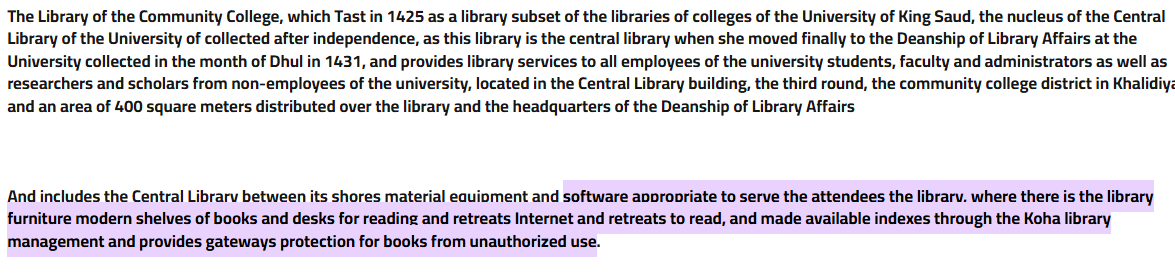
The Library of the Community College, which Tast in 1425 as a library subset of the libraries of colleges of the University of King Saud, the nucleus of the Central Library of the University of collected after independence, as this library is the central library when she moved finally to the Deanship of Library Affairs at the University collected in the month of Dhul in 1431, and provides library services to all employees of the university students, faculty and administrators as well as researchers and scholars from non-employees of the university, located in the Central Library building, the third round, the community college district in Khalidiya and an area of 400 square meters distributed over the library and the headquarters of the Deanship of Library Affairs
And includes the Central Library between its shores material equipment and software appropriate to serve the attendees the library, where there is the library furniture modern shelves of books and desks for reading and retreats Internet and retreats to read, and made available indexes through the Koha library management and provides gateways protection for books from unauthorized use.
Services:
Access to the full text of electronic books from anywhere and at any time.
Availability of free search (keywords - Full text - Title - Author - Subject - date of publication.
Giving a range of advanced interactive services.
Providing electronic reference service.
Provide awareness information service.
Provide uniform access to the digital library.
Search service in the electronic databases
Dean offers through its gateway to the Internet thirty-one (31) global electronic database covering all disciplines at the University of objectivity.
Automated search service in the electronic catalog for the University Libraries
Central Library offers research services in the electronic catalog Consolidated University Libraries collected, and provide training and guidance on the use of the electronic catalog and take advantage of it, and a link to the index on the Internet is: http://dla.mu.edu.sa/node/22
Central Library offers research services to the beneficiaries in the Internet is regulated, in order to obtain information and sources that may not exist within the sources of information the university libraries
The Deanship of Library Affairs at Majmaah University started to work on the development of the university libraries since the appointment of a supervisor to run its activities in the middle of the year 1431H. On 29thZliqad, 1431H, an approval was granted by H.E. the Minister of Higher Education and the Rector of the University Council to appoint a Dean for Library Affairs. Right from its outset, the Deanship of Library Affairs worked hard and prepared a strategic plan to achieve its mission and complete its various projects including a number of current and future projects of the Deanship. The Deanship and the Central Library are located at the new building of the University Headquarters - University City of Majmaah University.
Vision:
Upgrading the university libraries so as to make the minarets of knowledge, centers for providing all kinds of information, and sources of learning, searching and innovation in an encouraging and motivating atmosphere.
Mission:
Supporting learning and research needs of the university employees and students through providing information storages, academic curriculum, and offering a variety of services. It also seeks to provide suitable atmosphere for reading and utilizing these services, creating programs, different cultural activities, spreading of reading culture, and enhancing our attitude towards the books.
Objectives
A. Providing information sources in all its different kinds required by libraries and units of the university
B. Providing technical treatment and organization of information sources within libraries affiliated to the university through using the best vocational methods which would contribute to make use of its sources accessible for beneficiaries
C. Ensuring continuous planning and offering information services in all the affiliated libraries in a way which would be suitable for the beneficiaries’ requirements
D. Planning for investing the allocated budget for information sources and services and development of its resources.
E. Establishing a digital library for the university and improving, optimizing its services on a continuous basis.
F. Extending cooperation with other libraries and authorities of mutual concern in a way to achieve benefits to the university and its different units.
G. Organizing fairs in the field of libraries and information and participation according to the pursued measures.
H. Promoting the scientific production of the university members using proper means.
I. Ensuring continuous planning and providing sufficient well qualified manpower in the field of libraries and information according to size and requirements of work and the offered services in the different libraries of university.
J. Preparing criteria, specifications and measures related to the university libraries and its services in a way which ensures the high quality of its services offered through such libraries.\
Rules and Regulations
Deanship of Libraries Affairs has completed the regulations to be applied in branch libraries in faculties and centers. These regulations and rules are to be fixed and implemented in Deanship of Libraries Affairs. This set of regulations comprises forty-one articles in three chapters:
7.1.1. Lending System and Booking Information Objects (Article 16) Following groups are allowed to borrow information objects to:
A. Teaching staff, lecturers, teaching assistants in university
B. Graduate students in university
C. Graduate students who are not employed by university
D. Undergraduate students in university
E. University male and female employees
F. Affiliated libraries within the university
G. Other universities in Saudi Arabia and Gulf countries according to the agreements signed in this regard.
The borrower is not allowed to borrow any book unless they show an ID which proves they belong to university (Article 17).
Following information Objects are not allowed to be borrowed (Article 18).
A. Information objects that have reference nature such as knowledge circles, dictionaries and guides
B. Unpublished PhD and Master's theses
C. Unique books D. Paperless information objects (audio, visual, CDs, video books)
E. Scientific periodicals that are related to the topic
F. Government printed books, documents, maps and folders
G. Books that there is only one copy of. Teaching staff and teaching assistants are excluded as they could borrow them on weekends
H. Booked books I. Books that are stamped (Not for Lending)
J. Books that have more than two volumes
7.1.2. Financial Guarantee (Article 19)
A. There is a borrowing card worth 1000 riyals issued for all graduate students who are not employed by the university. The card validity is one year and must be renewed yearly before one month of expiration date.
B. Money of financial guarantee is to be deposited in the account of Deanship of Libraries Affairs, and it will be refunded to the borrower in the event they want to cancel the borrowing card.
C. In case any borrower receives a fine, it will be deducted from the deposited financial guarantee by the borrower. If the fine is more than 1000 riyals, the user will be asked to pay the difference.
Financial Guarantee (Article 19)
A. There is a borrowing card worth 1000 riyals issued for all graduate students who are not employed by the university. The card validity is one year and must be renewed yearly before one month of expiration date.
B. Money of financial guarantee is to be deposited in the account of Deanship of Libraries Affairs, and it will be refunded to the borrower in the event they want to cancel the borrowing card.
C. In case any borrower receives a fine, it will be deducted from the deposited financial guarantee by the borrower. If the fine is more than 1000 riyals, the user will be asked to pay the difference.
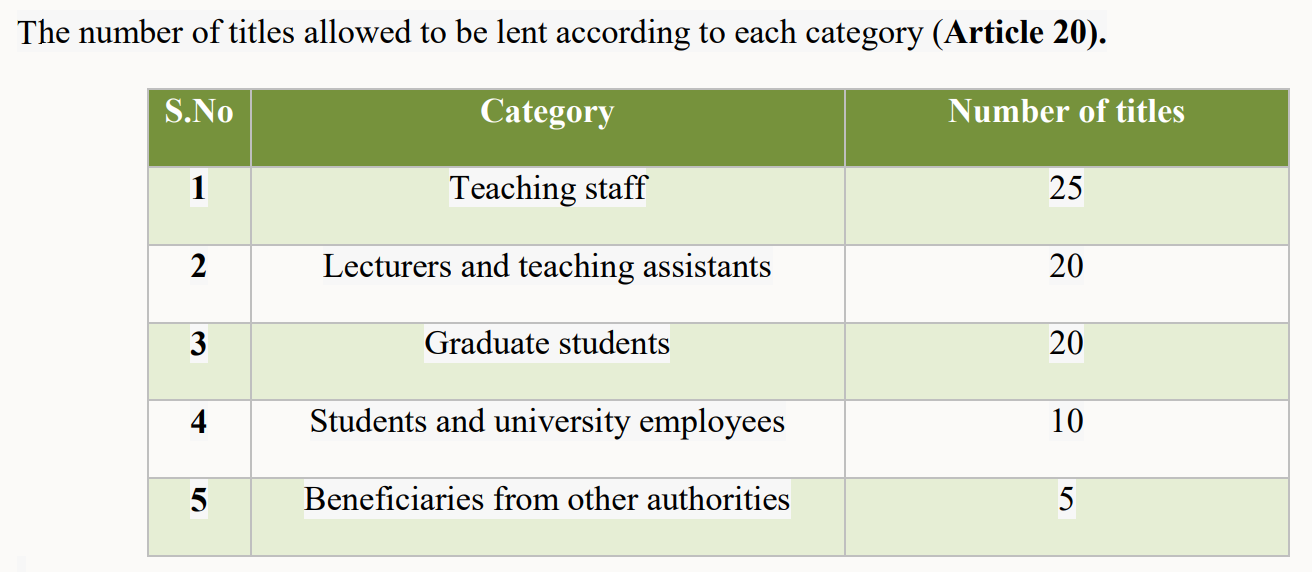
Borrowing period (Article 21)
A. Faculty members, lecturers and teaching assistants are allowed to keep the book for a complete academic semester; graduate students for sixty days. Faculty members are allowed to renew one time for one more semester.
B. University students and employees are allowed to renew one month for only one time.
C. Director of Beneficiaries services section in the central library and librarians in branch libraries are allowed to shorten the lending period to one month for the categories mentioned in clauses (A and B) for most borrowed information objects that there are not adequate copies of them in the libraries.
D. The borrower is allowed to renew the borrowing period in the event the books they have are not requested by another library user.
E. The borrower must return the books before the specific timing of return in case it was requested from him within a period of three days at the maximum from the date he was informed by Deanship.
Booking books (Article 22)
A. Faculty members are allowed to book some books for a fixed period of time for students use inside the library, but these books are not allowed to be lent for external people.
B. Lending section director has the right not to allow lending of any book in the event he sees it is necessary to keep it in the library.
C. Booked books should be organized as it is explained in clauses (A and B) according to the following:
a. Internal lending for every female and male student for two hours maximum. It is renewable in the event the book is not often borrowed.
b. Lending section director is allowed to lend some copies of the booked books before one hour of library close-time provided it will be returned the next day in the morning before 9 o'clock.
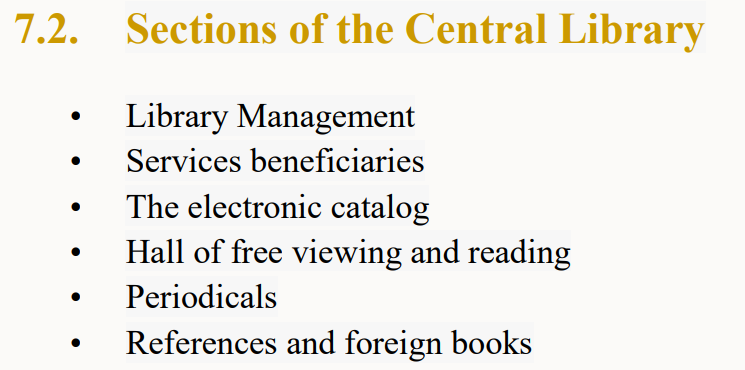
Central Library Services
Access to Data
It provides access to data provided by the Central Library and branch libraries through internal services by providing the right atmosphere, counseling and guidance services.
Printing and Imaging Service
Printing and imaging services are provided to the students for the educational process according to the rules laid down by the Deanship.
Guidance Service
The Deanship welcomes different groups of students under the supervision of some faculty members to visit the library. The students are briefed about the use of the library and the services provided by the Deanship of Library Affairs.
Reference Services
The Data provides answers to questions and queries of the beneficiaries and employees of the university through reference sources such as dictionaries, encyclopedias, manuals and reports in both printed and electronic forms.
Access to Daily Newspapers and Magazines
The Deanship provides a number of daily newspapers for consultation in the Library like: "AlRiyadh", ―Saudi Gazette‖, ―Almadina‖ (newspaper), etc.
Digital Resources:
Majmaah University facilitates electronic access to knowledge through its digital platforms. The Saudi Digital Library (SDL) – the largest collection of e-books in the Arab world – is available through the university for academic research, offering over 114,000 full-text e-books from hundreds of publishers mu.edu.sa mu.edu.sa. The university’s library launched a unified search portal called MuFind under the initiative “Your Time in Your Home” to support “all researchers to access information sources by browsing more than 800 million electronic scientific materials” (including e-books, articles, audio books, theses, etc.) mu.edu.sa mu.edu.sa. This one-stop search portal – the first of its kind among Saudi universities – allows users to seamlessly search the library catalog and digital resources in one place, enhancing information awareness and knowledge enrichment mu.edu.sa mu.edu.sa. These electronic services are freely accessible to library beneficiaries and researchers; the MuFind portal, for example, had over 20,000 visits shortly after launch and is open via the web mu.edu.sa. The library’s website also provides online databases and catalogs for public use – including global academic databases (31 databases covering all disciplines) and an electronic catalog that anyone can search via the internet mu.edu.sa mu.edu.sa. In essence, the university is providing “traditional [printed] and electronic information sources” side by side for the benefit of all users mu.edu.sa.
Saudi Digital Library (SDL)
Saudi Digital Library is the largest collection of e-books in the Arab world which currently contains more than 114 000 e-books with full-text on various disciplines of more than 300 publishers worldwide such as Elsevier, Springer, Pearson, Wiley, Taylor & Francis, Mcgrawhill, etc. It also contains books ofworld-class academic publishers like Oxford University and Harvard University.
Services:
· Access to the full text of electronic books from anywhere and at any time.
· Availability of free search through keywords (Full text - Title - Author - Subject - date of publication).
· Giving a range of advanced interactive services.
· Providing electronic reference service.
· Providing awareness of information service.
· Providing uniform access to the digital library.
http://dla.mu.edu.sa/node/25 7.5.
Search Service in the Electronic Databases
Deanship of library affairs offers through its gateway the Internet thirty-one (31) global electronic database covering all disciplines at the University and can be accessed through the portal at the following link: http://dla.mu.edu.sa/node/36
Automated Search Service in the Electronic Catalog
Central Library offers research services in the electronic catalog and provides training and guidance on the use of the electronic catalog to take advantage of it. Following is a link to the index on the Internet http://dla.mu.edu.sa/node/22
Search Service on the Internet
Central Library offers research services to the beneficiaries via internet in order to obtain information and sources that may not exist in the sources of information within the university libraries.
The university launches the "Your Time at Home" initiative to browse more than 800 million electronic scientific materials distributed among electronic books, scientific articles, audio books, university theses, and others.

The Deanship of Library Affairs at Majmaah University launched the “Your Time at Home” initiative using the Unified Search Portal (MuFind). This initiative contributes to supporting and encouraging all research and scientific processes, helps enhance information awareness and knowledge enrichment, and provides knowledge sources for all researchers to access information sources by browsing more than 800 million electronic scientific materials distributed among electronic books, scientific articles, audio books, university theses, and others. This, in turn, allows beneficiaries of university libraries and researchers from the local community to obtain electronic copies - remotely - while they are in their homes via computers or smart devices to benefit from and view them. It is worth noting that the Unified Search Portal is the first of its kind among Saudi universities that allows beneficiaries to link the university libraries’ catalog and digital information sources in a single search portal without the need to navigate between different information sources. It also has many features and advantages, including the ability to access the social index available on the Internet, user participation in creating and enriching knowledge content, support for all types of research in information sources, and support for researchers with smart search tools.
The portal has been visited by 20,351 visitors so far. You can access the portal via the following link:
The General Administration of Libraries and Knowledge Resources held a one-week program
The General Administration of Libraries and Knowledge Resources held a one-week program to introduce beneficiaries to the services provided by the General Administration of Libraries and Knowledge Resources including the printed and electronic information sources, the Saudi Digital Library (SDL), facilities and self-service devices, documents and manuscripts, and cultural and community initiatives and programs.
Special Accommodations:
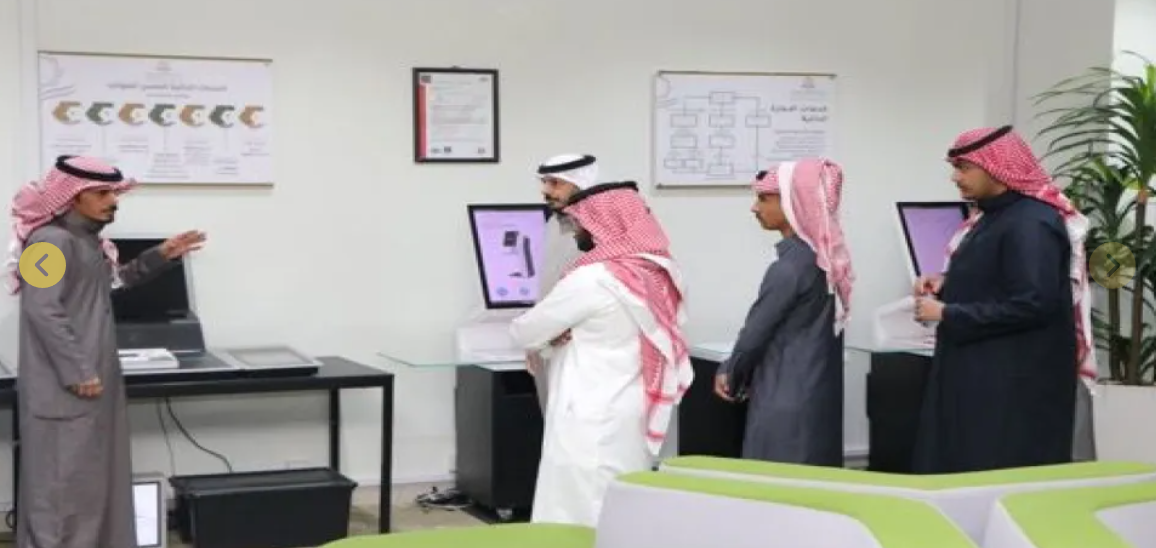
Majmaah University strives to make its library resources inclusive. For instance, during the International Day of Persons with Disabilities, the Deanship of Library Affairs showcased services for people with special needs, emphasizing that individuals with disabilities receive the same services as other users mu.edu.sa. Librarians demonstrated how special needs patrons can use facilities like Braille and audio materials, accessible printing/photocopying, and self-service checkout machines mu.edu.sa. In fact, the library has plans to open a dedicated section for audiovisual and Braille materials to better serve blind or visually impaired visitors mu.edu.sa. This “People with Special Needs Service” ensures that community members with disabilities can benefit equally from the university’s knowledge resources.
The Deanship of Library Affairs participates in the International Day of Persons with Disabilities.
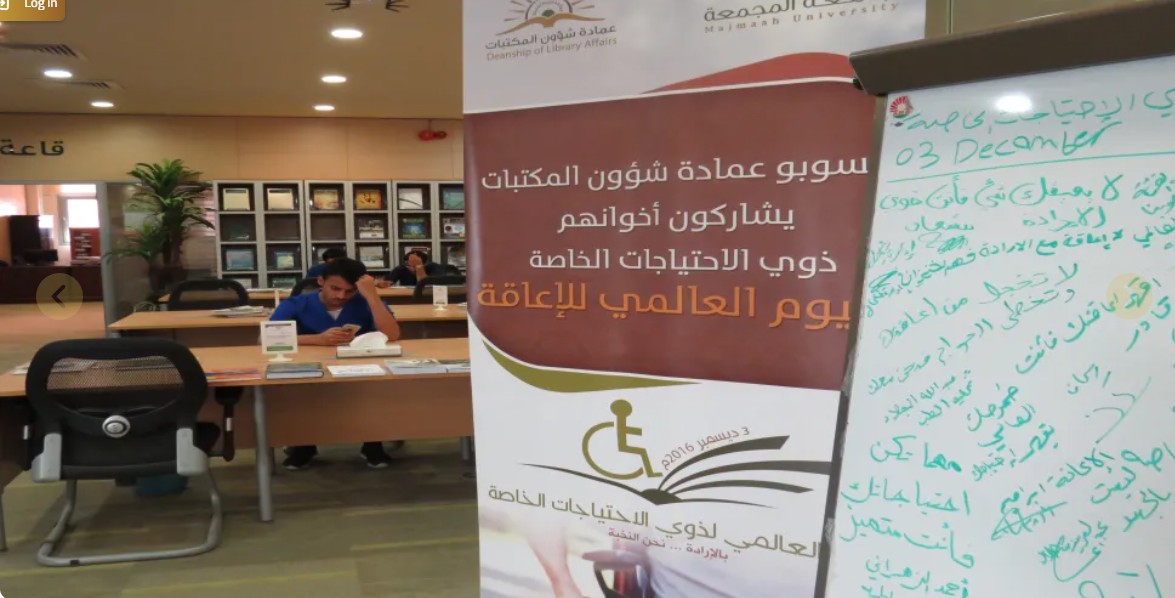
The Deanship of Library Affairs interacted with the International Day of Persons with Disabilities, which falls on December 3, with the participation of the Dean of Library Affairs, the Deanship’s staff, and visitors to the Central Library, including faculty members and students, by writing encouraging phrases, sharing this international day with their brothers and sisters with special needs.
A collection of books and references for people with special needs were also displayed, along with an introduction to the contents of the university libraries and the services they provide to other beneficiaries. An explanation was also given of how to benefit from printing and copying devices and self-lending devices for people with special needs.
The Deanship of Library Affairs also intends to open an audio-visual materials department to provide audio and visual materials in Braille to those who need this service after moving to the new Central Library building when it is constructed.
Borrowing and Requests:
While on-site library access and reference assistance are free, borrowing physical materials as an external user may involve a refundable security deposit – a form of charged access. According to library policy, external graduate students (not employed by the university) can obtain a borrowing card by placing a 1,000 SAR refundable guarantee (valid for one year) mu.edu.sa. This deposit is returned when the card is canceled, and it is meant to cover any potential fines or lost items mu.edu.sa. In practice, this policy extends borrowing privileges to outside scholars for a nominal guarantee, effectively supporting their research needs. The library also has provisions for “book retention” (reserving high-demand books for use within the library) and a “books requesting service.” For example, users can suggest new book purchases via a proposal form, and the library participates in inter-library cooperation – it accepts visit requests from other institutions and even allows borrowing for members of other universities under certain agreements mu.edu.sa. All of these services illustrate Majmaah University’s commitment to providing “traditional, scientific, research, knowledge, cultural, and electronic” services to the broader community, not just its own students.
Borrowing period (Article 21)
A. Faculty members, lecturers and teaching assistants are allowed to keep the book for a complete academic semester; graduate students for sixty days. Faculty members are allowed to renew one time for one more semester.
B. University students and employees are allowed to renew one month for only one time.
C. Director of Beneficiaries services section in the central library and librarians in branch libraries are allowed to shorten the lending period to one month for the categories mentioned in clauses (A and B) for most borrowed information objects that there are not adequate copies of them in the libraries.
D. The borrower is allowed to renew the borrowing period in the event the books they have are not requested by another library user.
E. The borrower must return the books before the specific timing of return in case it was requested from him within a period of three days at the maximum from the date he was informed by Deanship.
Booking books (Article 22)
A. Faculty members are allowed to book some books for a fixed period of time for students use inside the library, but these books are not allowed to be lent for external people.
B. Lending section director has the right not to allow lending of any book in the event he sees it is necessary to keep it in the library.
C. Booked books should be organized as it is explained in clauses (A and B) according to the following:
a. Internal lending for every female and male student for two hours maximum. It is renewable in the event the book is not often borrowed.
b. Lending section director is allowed to lend some copies of the booked books before one hour of library close-time provided it will be returned the next day in the morning before 9 o'clock.
Training Programs and Courses Open to the Community
Majmaah University, through its Institute of Studies and Consulting Services and other units, offers permanent training programs and educational courses that are accessible to people outside the university. Many of these programs are provided free of charge, while others are offered on a paid basis (such as professional diplomas), thus catering to different needs:
-
Free Training for the Community:
The university regularly announces free training programs for the local community (as well as for its own students). For example, in early 2023 the Institute of Studies and Consulting Services launched a set of free programs for community members and students, both face-to-face and online mu.edu.sa. The aim of these programs is to raise community awareness and build skills needed in the labor market. The offerings spanned multiple tracks – economic, social, psychological, self-development – and were open for anyone to register mu.edu.sa. Such initiatives are recurring and reflect an ongoing commitment to lifelong learning in the community. Indeed, the university’s training services cover a wide range of fields (administrative, technical, language courses, IT, healthcare, etc.), indicating that “training programs are provided in [a] wide-range of fields” for public benefit mu.edu.sa mu.edu.sa. These free courses and workshops are typically fully subsidized, meaning participants do not pay tuition or fees.
Free programs for local community and university students
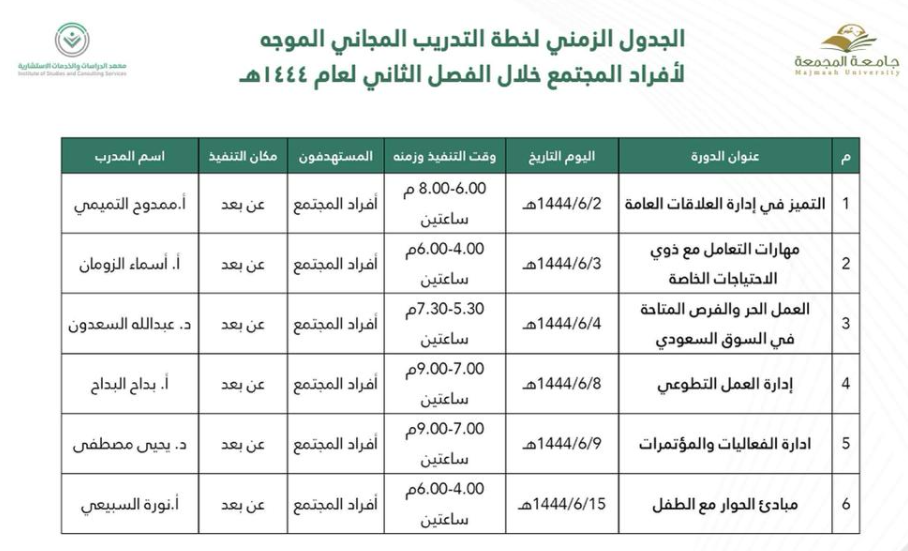
The Institute of Studies and Consulting Services at MU is pleased to announce that free programs are offered to the local community and university students, both face-to-face and online.
The programs aim to raise community awareness and equip students with the necessary skill for the labor market. The programs feature three tracks: economic track, social track, and psychological and self-support track.
To register in local community courses:
To register in courses for students:
https://linktr.ee/sustatinable
Training Programs
Training programs are provided in wide-range of fields such as:
· administrative
· legal
· Ceremonies and protocols
· Technical
· geometric
· educational
· Security and safety
· Healthy
· languages
· cyber security
· Strategic Planning
· Higher Management
· Performance indicators
· Other programs
-
Paid Programs and Certifications:
In addition to free community courses, Majmaah University also offers more advanced or extensive programs which may require fees – this constitutes the charged access side of their offerings. For instance, the Institute provides accredited diploma programs and professional certification courses for those seeking formal qualifications or specialized training mu.edu.sa. These are often longer-term programs or industry-recognized certifications that involve tuition. The university’s continuing education portal explicitly lists sections for “Paid programs” alongside the free community training, indicating that some courses have enrollment fees mu.edu.sa. Nonetheless, even these paid courses are part of the university’s outreach, as they are typically open to the public or professionals (not limited to enrolled students). The combination of free and paid options allows the university to serve a broad audience: free short-term workshops for general upskilling, and tuition-based advanced programs for career development.
-
Online Learning Initiatives:
Majmaah University leverages e-learning to reach learners beyond its campus. As early as 2014, it launched the “Mobile Social E-Training and Learning” initiative to foster an e-learning culture connecting the university with the community naseej.com. Using a modern online platform, this project was designed to “offer an attractive learning environment to remote and special needs students” and encourage widespread participation in learning via technology naseej.com. The initiative explicitly aimed to give all Saudi citizens opportunities for self-development regardless of their location, age, financial, or health condition naseej.com. In practice, this means many online courses, webinars, and training modules from Majmaah University can be accessed remotely by the general public. The University’s leadership noted that this approach “makes professional training available for people from all across the Kingdom”, underlining a strategy of national outreach through online education naseej.com. Therefore, whether through live virtual courses or self-paced online materials, non-students have access to learning resources from Majmaah University at no cost, aligning with the concept of open education.
Majmaah University Launches “Mobile Social E-Training and Learning” Initiative
Under the patronage of His Excellency the Rector Dr. Khalid S. Al-Mugren, Al-Majma’ah University has launched its “Mobile Social E-Training and Learning” initiative, using the Desire2Learn integrated learning environment.
Dr. Musallam Al-Dosari, Vice-Rector and Dean of E-Learning and Distance Education at the university, commented: “This unique project seeks to foster the e-learning culture, to enhance effective communication between the university and the community, and to realize the university’s strategic objective of serving the community.”
The university also aims to offer an attractive learning environment to remote and special needs students. The initiative encourages learners to participate in the learning process and to interact effectively with modern technology as it continues to change.
Furthermore, the initiative provides a promising training environment for its target audience by enhancing e-learning programs across the Kingdom. This, in turn, will afford Saudi citizens the opportunity for self-development, irrespective of their location, age, or their financial or health condition.
His Excellency Dr. Khalid M. Al Ankary – Saudi Minister of Higher Education – congratulated the Rector, Dr. Khalid S. Al-Mugren, on the university’s efforts – represented by the Deanship of e-Learning and Distance Education – to enhance e-learning culture and to make professional training available for people from all across the Kingdom.
Public Lectures, Events, and Use of Facilities
Beyond formal courses, Majmaah University as an institution hosts events and provides facilities that are open or offered to the general public:
-
Public Lectures & Events:
The university frequently organizes conferences, lectures, and community educational events that anyone can attend. In line with the U.N. Sustainable Development Goal 4.3, Majmaah University affirms that it hosts events open to the general public such as public lectures and community workshops mu.edu.sa. For example, the university held an international conference on universities and the Sustainable Development Goals, which was a “global call” bringing together academics, professionals, and interested members of the public mu.edu.sa. Similarly, various cultural events like Library Week – Knowledge for Everyone are organized to showcase the library’s role as a community knowledge hub, featuring workshops and book fairs open to visitors mu.edu.sa. This reflects a policy of welcoming the public onto campus for educational enrichment. According to the university’s community engagement platform, Majmaah is “strengthening the bonds between the university and the community through organizing joint events, volunteer programs, and training workshops,” as well as “providing a platform for exchange of experiences, knowledge and expertise between academics, researchers, and community members.” mu.edu.sa. In practice, this means local residents might receive invitations to attend seminars, guest lectures, exhibitions, or youth programs on campus, usually free of charge. These open events allow those not formally enrolled to still benefit from the university’s intellectual and cultural offerings (for example, attending a free public lecture by an expert or participating in a community science festival hosted at the university).
The International Conference shall be held: Universities and the Sustainable Development Goals 2030
https://event.mu.edu.sa/universities-conference
This conference represents a global call to unite the efforts and intellectual and academic minds and those interested in the Global Agenda for Sustainable Development 2030, who share a clear vision and a directed commitment aimed at promoting sustainable development worldwide, as the conference seeks to emphasize the importance of the responsibility entrusted to universities in achieving the Sustainable Development Goals 2030 (SDGs), in line with the successful development towards knowledge, understanding and practical application of these goals. This prominent event is a fertile forum for reflection and exchange of experiences, and contributes to expanding the horizon of knowledge, deepening understanding, and encouraging innovation and development in the fields of sustainability, as we aspire through it to launch the spirit of cooperation and dialogue between scientists, thinkers and innovators in order to achieve tangible and sustainable progress in this vital field, and we look forward - during its period - to a dialogue environment that contributes to creating an opportunity to review and discuss achievements, challenges and future opportunities related to the role of sustainable development in achieving sustainable development. development goals 2030.
Conference Venue:
Majmaah University is one of the public universities in the Kingdom of Saudi Arabia in the Riyadh region, and the university serves a geographical scope that includes the northern governorates of the Riyadh region. The university provides education at the undergraduate, postgraduate and applied studies levels, where more than 20,000 students study in the disciplines of medicine, allied medicine, dentistry, engineering, science, artificial intelligence, cybersecurity, law and business administration, arts and education, and universities also receive international students from different countries of the world, and there are specialized research centers and laboratories in health, engineering, science, and humanities, and there is a center specialized in rehabilitation techniques for the manufacture and installation of prostheses.
Main objectives of the conference
The core objectives of this conference are to enable in-depth dialogue on sustainable development and achieve its goals, and we seek to highlight the vital role played by universities in this context, with a focus on building strategic partnerships to promote sustainability initiatives and practices, and the conference also works to integrate the diversity of visions and solutions, to ensure a deeper and multidimensional understanding of sustainable development issues, by creating an environment to emphasize the role of universities in accelerating work to achieve the Sustainable Development Goals 2030. Through this intellectual, scientific and Professional forum, we hope to contribute to the exchange of knowledge, promote innovative thinking, and build the optimal capabilities of universities and individuals to achieve the goals of sustainability 2030, and summarize the main objectives of the conference as follows:
· Seek to shed light on the key and multifaceted role of universities in achieving the Sustainable Development Goals, while reviewing their achievements and the challenges they have faced.
· Provide a platform for the exchange and discussion of innovative strategies and approaches to enhance the effectiveness of universities in achieving these goals.
· Create an appropriate environment that stimulates substantive discussions, mutual learning and enhancing cooperation among participants.
· Focus on strengthening the capabilities and determination of universities and individuals in pursuit of sustainability.
· Emphasizing joint efforts and renewed cooperation that can contribute to achieving tangible progress in the field of sustainable development, ensuring a more just and sustainable future for all.
Conference Themes
The international conference “Universities and the Sustainable Development Goals 2030: Targets and Practices” revolves around four carefully selected themes, each designed to stimulate insightful discussions and meaningful contributions.
The first axis: development and sustainability: goals, concepts, and impacts.
It discusses the philosophy of development, sustainability and sustainable development, and concepts associated with the United Nations Sustainable Development Goals and aims to deepen our understanding of these critical concepts in a global context.
Second Theme: Sustainable Development Goals 2030 and the Kingdom’s Vision 2030
It presents topics that discuss the relationship between the Kingdom's Vision 2030 and the Sustainable Development Goals 2030 by mentioning aspects of the link between the development goals and the vision, as well as the Kingdom's efforts in achieving the sustainable development goals.
Third Theme: The Role of Universities in Achieving the Sustainable Development Goals 2030: Current Reality
It describes the reality of the efforts made by universities through their functions to contribute to the achievement of the Sustainable Development Goals 2030, and the obstacles that universities face in order to play the role required of them in this field.
Fourth Theme: Activating the role of universities in accelerating the achievement of the Sustainable Development Goals 2030
This theme allows participants to present proposed strategies and visions to activate the role of universities in achieving and accelerating the achievement of sustainable development goals.
My Community Platform
The platform aims to create a positive impact on the local and national community. This vision is reflected in a set of strategic goals, which include: Strengthening the bonds between the university and the community through organizing joint events, volunteer programs, and training workshops. Providing a platform for the exchange of experiences, knowledge, and expertise between academics, researchers, and community members. Supporting community initiatives that contribute to solving local problems and developing the community. Building strategic partnerships with government institutions, private sector organizations, and non-governmental organizations. Measuring the social and economic impact of its programs and initiatives.
-
Facility Access and Scheduled Visits:
Majmaah University also provides access to its teaching and research facilities for external groups through programmed visits and partnerships. Schools, organizations, or individuals can arrange visits to campus – for instance, the library welcomes supervised group visits where students from outside are “briefed about the use of the library and the services provided” mu.edu.sa. There is an official Central Library Visit Request Form to facilitate such visits mu.edu.sa, indicating that the public can schedule tours or research visits to the library. Moreover, the university has a Classroom Reservation Form mu.edu.sa, suggesting that its classrooms or lecture halls can be reserved – this could be for community classes, workshops, or joint programs with outside organizations. While primarily intended for internal use, in some cases the university does lend its facilities to host community-centric events (for example, local competitions, training courses by government programs, or extension lectures). Laboratories and computer labs are sometimes showcased to visiting school students or used in collaboration with external educational initiatives, thereby offering access to modern scientific equipment and technology for those outside the university. These facility uses are usually free when part of outreach or educational collaborations (no rental fee for official educational visits), though they must be arranged through the proper channels. By providing access through programmed visits, Majmaah University extends its physical resources – classrooms, labs, libraries, computers, and even office spaces – to various community channels, enriching education beyond its own student body.

The General Administration of Libraries and Knowledge Resources held a one-week program
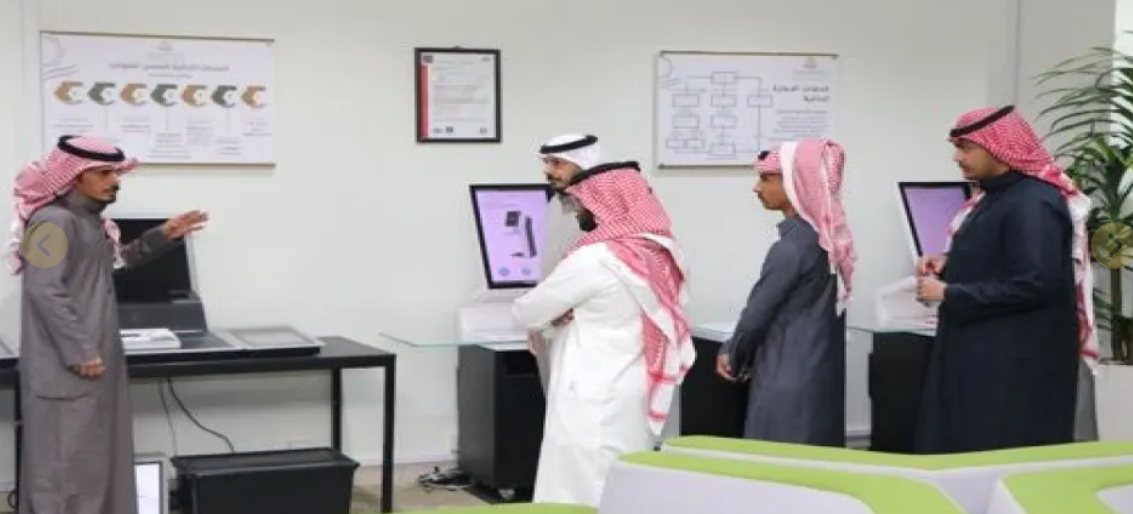
The General Administration of Libraries and Knowledge Resources held a one-week program to introduce beneficiaries to the services provided by the General Administration of Libraries and Knowledge Resources including the printed and electronic information sources, the Saudi Digital Library (SDL), facilities and self-service devices, documents and manuscripts, and cultural and community initiatives and programs.
-
Support for External Researchers:
The university supports not only casual visitors but also outside researchers who may need to utilize its resources. As noted, the central library allows external scholars to consult materials freely on-site and even borrow materials with a refundable deposit mu.edu.sa. Additionally, Majmaah University often enters into cooperation agreements with other universities and research institutes. Under such agreements, “other universities in Saudi Arabia and Gulf countries” can share library resources, and their members may access Majmaah’s collections according to the terms set mu.edu.sa. This inter-library collaboration means a researcher from another institution can request materials or visits without hurdles. While laboratories and specialized research centers are primarily for university affiliates, Majmaah has research centers in health, engineering, science, and humanities that collaborate on projects of broader interest mu.edu.sa. Qualified researchers from outside could partner or request usage of certain labs (with proper approvals) especially if it’s a joint research or a community-oriented study. Importantly, the knowledge exchange goal of the university encourages its faculty to engage with community researchers – for instance, by offering free consultations or expertise. The Institute of Consulting at MU even advertises “Free Consultation for Community” services mu.edu.samu.edu.sa, which implies that experts at the university will give advice or research guidance to individuals or organizations at no cost. All of these efforts underscore that Majmaah University views supporting external researchers and learners as part of its social responsibility, generally without charging any fees for basic access or advice (unless one is enrolling in a formal program as noted earlier).
Community Outreach and Special Services
Majmaah University extends its educational mission to the community through various outreach services that go beyond the classroom:
-
Mobile Health Services:
Uniquely, the university provides free health services to the public as an educational and humanitarian outreach. It established a Department of Mobile Medical Services – essentially a mobile clinic unit – to serve community healthcare needs mu.edu.sa. These are “fully equipped clinics and medical facilities” (including multiple ambulances outfitted with modern emergency and diagnostic equipment) that make regular visits throughout the year to numerous towns, villages, and remote communities mu.edu.sa. During these visits, the university’s medical staff conduct medical and environmental surveys, offer on-site diagnosis and treatment, and educate the population on health issues mu.edu.sa. Services provided include measuring blood sugar and blood pressure, treating acute and chronic conditions, performing dental check-ups, and more mu.edu.sa. Over 50,000 cases had been seen by these mobile clinics within a few years of operation mu.edu.sa. The mobile units effectively turn the university’s medical expertise into a traveling community clinic – they also participate in immunization drives, blood donation campaigns, health awareness programs, and even visit schools to promote health education mu.edu.sa. These health services are offered free of charge to all community members (citizens and residents), demonstrating the university’s commitment to serve society’s needs directly. While this might not be a traditional “educational resource,” it is an important community service that also provides practical training opportunities for the university’s medical students and staff, aligning with educational outreach (the community benefits from health knowledge and the university fulfills a teaching hospital role).
UNIVERSITY MEDICAL SERVICES TO COMMUNITY WITH HUMAN DIMENSIONS
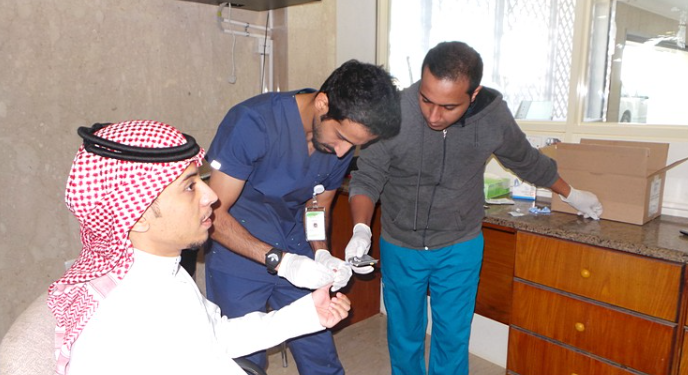
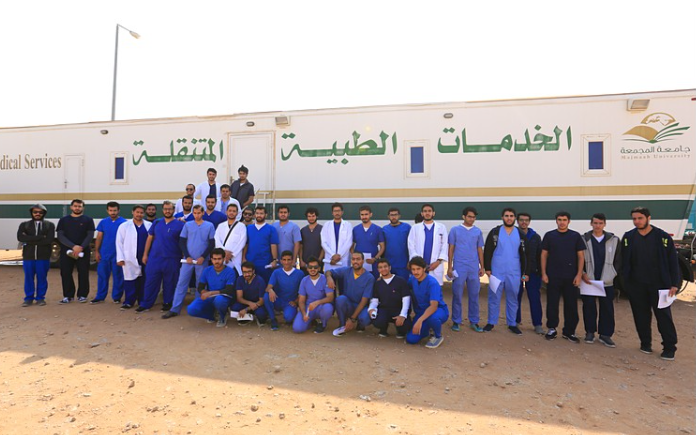
Within the framework of the University's endeavor to achieve one of its most important objectives through the provision of medical services to community members, the University has established the Department of Mobile Medical Services, which is fully equipped clinics and medical facilities serving as an integrated health center with three ambulances equipped with the latest emergency equipment making regular visits throughout the year to a number of cities, villages and communities in the remote areas within the University community for the purpose of conducting a medical and environmental survey for citizens and residents. Moreover, the clinics provide diagnosis, treatment, and education of the population from measuring blood glucose, blood pressure and treating acute and chronic cases besides providing dental checkups along with other services.
A number of serious medical conditions have been discovered during those visits in addition to humanitarian cases that needed intervention. More than 50,000 different cases have been diagnosed by the clinics since the establishment of the Department. The Medical Services include a clinic equipped with ultrasound for gynecology, obstetrics, internal diseases, an x-ray clinic for the diagnosis of bone and chest diseases, pediatric, general medicine and dental clinics,, laboratories for men and women, pharmacy, nursing rooms, dressing rooms for men and women, waiting rooms and toilets. The clinics are fully equipped with electricity, air conditioning and a central network of medical gases. With a fully qualified specialized medical and nursing staff, the mobile clinics also participate in blood donation campaigns, immunization campaigns, social programs, national events, awareness campaigns and various health education as well as periodic visits to schools in all stages in addition to its presence in seasonal occasions, festivals and conferences. A number of princes, ministers and officials in a few ministries, provinces and government departments have visited the clinics and expressed their admiration of the quality services provided to beneficiaries.
-
Information and Inquiry Services:
In addition to formal programs, the university makes itself accessible for general inquiries and guidance. The main website hosts an “Open Data” section and FAQ smu.edu.sa, indicating transparency and willingness to share information with the public. Moreover, the library’s reference service (mentioned earlier) effectively allows anyone to ask questions – be it a student from another school looking for sources, or a local citizen needing research help – and get expert answers mu.edu.sa. The university also has a support platform and contact points where external users can seek advice (for example, a “Contact Us” and support ticket system mu.edu.sa). Such inquiry response services ensure that people outside the university can get guidance or information promptly, whether it’s about accessing a resource, getting scholarly help, or any university-offered community service.

-
Internet and Computing Access:
While most online services are accessible remotely, Majmaah University also provides internet access on campus for visitors in certain contexts. Guests at the library or attendees of public events can usually connect to guest Wi-Fi or use public computers in the library. The library explicitly notes it provides internal access to data and an atmosphere to study, which includes internet and computing services for educational use mu.edu.samu.edu.sa. During library visits, for instance, external users can utilize the available PCs to search databases or write their reports (printing and copying services are available too, generally at a nominal cost per page for all users) mu.edu.sa. Therefore, community members who lack resources like computers or internet at home can benefit from the university’s facilities as needed – an important aspect of providing equitable access to knowledge.
-
Cultural and Social Initiatives:
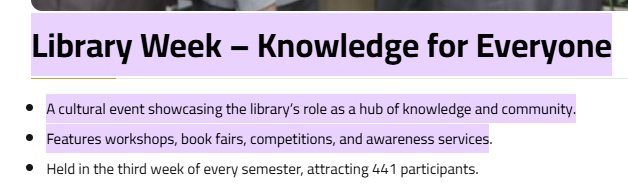
The university’s role in the community also involves cultural, traditional, and knowledge-sharing events. It hosts book fairs, science exhibitions, and cultural weeks where local people are invited. For example, “Library Week – Knowledge for Everyone” is a cultural event that includes workshops and competitions to engage the public in learning mu.edu.sa. The “My Community” platform at Majmaah University focuses on volunteer work and solving local problems, often inviting outside participation mu.edu.sa. These initiatives, while not “resources” in the narrow sense, constitute educational opportunities and services (like mentorship programs, awareness campaigns, etc.) available to non-students at no cost. They provide traditional knowledge sharing (e.g. lectures on cultural heritage), scientific outreach (e.g. public science days), and general enrichment.
In summary, Majmaah University does provide extensive access to educational resources for individuals not enrolled at the university, fulfilling its role in community education and service. Most of these resources are offered free of charge – such as on-site library use, reference help, public lectures, community workshops, online courses for the public, and outreach services (health campaigns, etc.). There are some services that require payment or deposits: for instance, enrolling in a certified diploma program entails tuition fees, and borrowing books as an external patron requires a refundable security deposit mu.edu.sa. However, these costs are either optional (for advanced programs) or collateral (returned if no losses occur), meaning that basic access remains free. Majmaah University’s efforts – from permanent training programs open to all mu.edu.sa, to inviting outsiders to use its library and attend courses/lectures, to providing traditional print resources and cutting-edge electronic databases, and even offering its facilities and support to external educators and researchers – illustrate a comprehensive approach to lifelong learning. The university’s traditional, scientific, research, cultural, and electronic services are made available through scheduled visits, collaborative events, and online platforms, ensuring that education and knowledge are shared beyond the campus walls. This community-inclusive strategy helps Majmaah University contribute to sustainable development and educational quality in its region, aligning with global best practices for universities’ social responsibility mu.edu.sa.

شارك برأيك وساهم في تحسين خدماتنا.
أعجب 0 من 233 زائر بمحتوى الصفحة. (0% مؤشر رضا الزوار)